

The FarmED Podcast: Crops in Construction with Architect, Tim Tasker
Apr 16, 2026
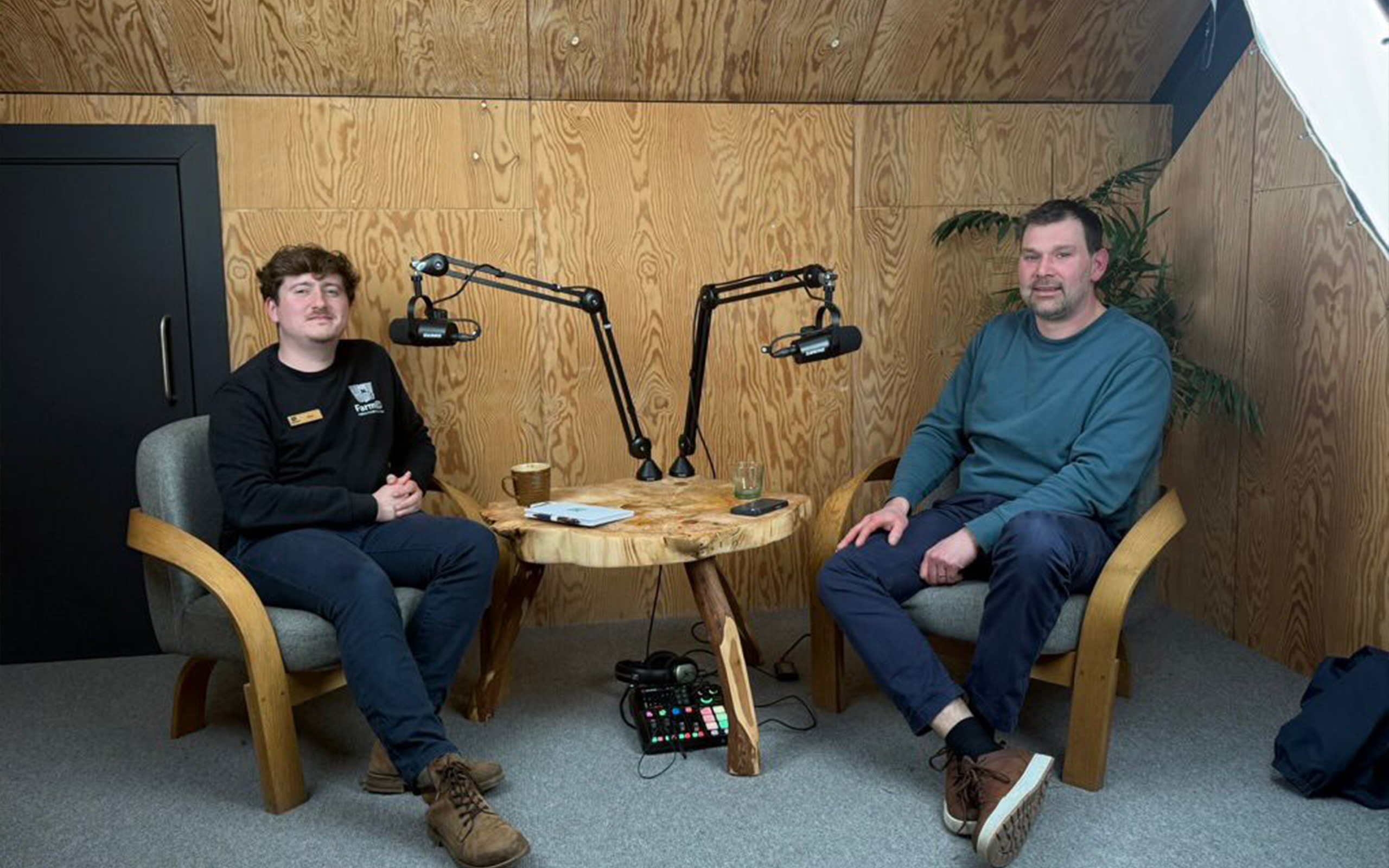
Award-winning architect, Tim Tasker, who designed the FarmED Conference Barn and Cafe, has recently been working on a new building at Honeydale Farm which is constructed of hempcrete, a hugely versatile, breathable and sustainable building material that captures carbon.
Tim has been working with UK Hempcrete and the Centre for High Carbon Capture Cropping and on this episode of the FarmED Podcast, Tim talks to Alex about why he is so excited about the opportunities of hempcrete. He discusses what makes a healthy building and how hemp could potentially revolutionise the construction industry, offering opportunities for farmers and creating sustainable, affordable building materials with could also make self-builds easier.
Tim also talks about his vision for the future - why we need more beauty in house building and his ‘big aim’ to encourage a ‘network of small businesses’ around the country that could supply localised construction as ‘an alternative to commercial construction techniques.’
Links: https://www.ttarchitects.co.uk/
https://www.carboncapturecropping.com/
Full Transcript
Alex: We shape our buildings and thereafter they shape us. Welcome to FarmED for another edition of The FarmED Podcast with me your host Alex Dye and today I'm joined by award-winning architect and designer of the FarmED buildings Tim Tasker. How are you today?
Tim: Good, good to see you.
Alex: Wonderful. So who is Tim Tasker? What's your story? How did you get to be where you are today?
Tim: So I was born in the North East, rural North East Yorkshire. I wanted to be a farmer for many, many years. My parents are both architects and one was an engineer, so I guess that was fairly ingrained in me.
Alex: So why did you want to be a farmer?
Tim: All I wanted to do was drive tractors. I still am obsessed with them, I love them, and I like growing things. Yeah, I just really was quite heavily involved in the landscape when I was a little boy, from fishing to getting my tractor driving license when I was 16. And then I think I wanted to become a car designer for many years, and then I couldn't because I didn't have the maths A level. And then always doing art, always drawing and drawing and drawing. And then yeah, I got into architecture, which was natural. It's quite a vocational thing, isn't it, really, I guess, once you do architecture, you're in? And so, and then studied in Oxford Brookes down the road for my degree. Then went to London to UCL and then ended up working for a series of practices, starting off in a small classicist office, Russell Taylor Architects, using an HB pencil, drawing one-to-one Corinthian columns and then went to work with some bigger guys, worked for the Millennium Wheel architects, worked on some exciting projects there.
Alex: So are you telling me that you designed the Millennium Wheel?
Tim: No, no. Although many people have claimed, no, not at all. But I worked on some similar sort of engineering-y type projects. Yeah, including some bridges and some walkways and a school or two. And then went off to work for Wilkinson Air, where I worked on a number of things, including four and a half years on Battersea Power Station. Yeah, various other…Thames cable car crossings on the bridge team for many years. And then went out to the Middle East for a little bit with another practice, Jonathan Dunn Architects, and worked out in the Middle East for a while. Didn't enjoy it much. And then came back and then started a little practice in 2016. And quite soon after, came here for the first time. It must have been 2017 or 18, I think, after Ian and Celene had just sort of bought the farm. Yeah.
Alex: So, you met Ian and Celene. How did you come to be involved with the design of the buildings here at FarmED?
Tim: Well, I went to uni, with dear old Paul. I think it was in 2017 and it was amazing. I came here with a dear friend of mine, Chris, who is also an architect who also worked on it in the early days and assisted as well further on in the process by my friend Ant, who's also an architect, who also helped on it as well. And it was an amazing process, you know. It was, we didn't know where the farm buildings were going to be, where the entrance was going to be, what even the farm was. This is before the days of when it was called FarmED. And yeah, it was an amazing process with Ian's lead, you know. It was all, yeah all inside them so to speak and um yeah it was it was brilliant working it through with them.
Alex: It sounded like we were discussing this just before the building that we are currently in which for anyone who's been to FarmED is our our Cafe our sort of our library space in it as well but it originally had a completely different plan to what for what this building was going to be. Is that right.
Tim: Yeah yeah it was going to be called the enterprise barn and um yeah, the idea of it was to kind of accommodate small microprocessing businesses. And so it was, yeah, it was an agricultural steel frame set up on a standardized bays, you know, to coordinate with standard sheet sizes of various materials. And the idea was that the frame could take a mezzanine floor if it needed to be, and the little, you know, microprocessing businesses for honey or beer or whatever it was, could accommodate these little spaces. And then it all sort of evolved and became much more focused on food. Yeah, and then it kind of evolved into a cafe, really. But that was the exciting thing about the process as well, really, was kind of evolving the architecture out of the kind of programmatic requirements of Ian ad Celene. Kind of seeing that come into being was really exciting, one of the best design processes I think I've ever worked on. There wasn't a big consultant team. It was sort of a pre-consultation process with the council as opposed to, yeah, straight in. So it was, yeah, it was an amazing experience.
Alex: So from what it sounds like then, did Ian and Celene approach you and say, we want to build this place, do you have any ideas for us? And it wants to be, we want it to be this, this, and this? Or did you say, tell you what guys, I've got some ideas, because it sounds like what you're saying, it's a very collaborative process. There was lots of back and forth and things changing and taking shape over the years.
Tim: It was. Yeah, it was really collaborative. And there was, you know, many other people involved in the process as well. You know, back in the early days, you know, Ian's little black book of people was all there and lots of things influenced it from, you know, where the apiary should be to, yeah, sort of where the soil changed and then I remember, the Fibonacci concept was kind of born quite early on in terms of the geometry and what came from that.
Alex: So as someone who has no basis in architecture, could I ask you to just, for the layman among us, what is the Fibonacci concept?
Tim: I mean, sort of golden ratio, which is found in everything.
Alex: So like a sort of snail shell sort of shape?
Tim: Yeah. So there's a sort of triangle shape that comes out of that, and then another square. And so if you look at the farm buildings here, and the courtyard spaces, and the spaces around it, they're sort of derived from that geometry, from the kind of master plan of it right down to the smaller details of the building.
Alex: And what's the benefit of that?
Tim: It’s a lovely place to be in, because, yeah, golden ratio spaces, they feel really good. And, yeah, you get a nice proportion between the buildings in terms of the spaces and the ratios. And, yeah, they're quite simple utilitarian buildings, aren't they, really? And so that was the kind of driver for the setting out and the geometry.
Alex: I suppose you had to think quite a bit about not just what the buildings would be inside, but their place within the landscape as well. Because we are in the Evenlode Valley here. We have those rolling hills over. Did you think much when you first arrived on the site about how you would make the buildings look and how you would make them play within the environment?
Tim: Yeah. I mean, do you know, I remember the first time I saw the Evenlode Valley, I was like, shit, this is crazy. You know, it looked like sort of Tuscany or something, coming from South London, you know, when I first saw it. And, yeah, so there was a deep respect for the landscape. And, you know, it always had to be a contextual building, as it quite often has to be. But it was, yeah, and so, you know, it's a sort of modern day farmstead. It's a series of buildings arranged around the courtyard with, you know, one of the buildings preventing the prevailing wind from coming into the courtyard and creating a space between, you know, the spaces between the buildings become more important. So yeah, the kind of roofscape and the way the buildings were arranged, you know, it was definitely an early consideration to work with the landscape and the local vernacular .
Alex: And whilst we were chatting earlier, you brought up this concept of healthy buildings. So could you define for us what is a healthy building? What is a healthy building?
Tim: Well, I think we spend 90 % of our time in buildings now. And so they have a profound effect on our health. And so there's lots of things that we can do to make internal spaces healthy. And so we obviously have to provide good clean air, four air changes an hour, you know, and fresh air, healthy air. We need to think about cross ventilation. Yeah, we need to think about relative humidity in spaces and how that's controlled. So treating air like a building block almost is really important. And then we need to make sure there's enough light in our spaces, natural light, really, really important.
So they say, you know, on the spring equinox, you should have two hours of direct sunlight in the space. And, you know, it's getting much easier now with these fancy tools to kind of calculate this and to assess, you know, what's the maximum daylight we can have without overheating and how we can passively control light. So yeah, so light's very important. Acoustics, very important. Acoustic comfort, very important. And I think, yeah, the kind of connection to the outside, connection to nature. We all come from nature. You've got to have a view into some sort of green space. You know, even if you're dealing with a really dense urban environment, it's how do you create a little view into a courtyard or, a little sight of a tree off to your left or something. So I think, yeah, I think the connection to the outside is very important for a healthy space. And, you know, there's other things which are more difficult to quantify, but it's kind of asking this question, what gives a space a spirit? What gives a space its soul? And, you know, quite often when you have you know, some really lovely internal material finishes, for example, that have been handcrafted and there's some love and some care that's gone into making the components around you. You know, that really gives the building some permanence, gives it some presence, gives it some spirit, you know, and I think that's very healthy as well.
Alex: So is it something that you've always included when it comes to designing buildings? Is it something that's right back to the start, when you were very first beginning your architectural journey, did you think, healthy buildings, that's the way I want to go, or is it a bit more of a more recent understanding?
Tim: I don't think so. I mean, to be perfectly honest with you, I spent years designing really unhealthy buildings in these big practices. I mean, it's just, you know, it's kind of, yeah, so basically after the war, pretty much sort of 50s onwards, we'd just been designing these plastic bags for people to live in. And, you know, all these stupid sort of facade systems that are, you know, all derived from petrochemicals. And, yeah, kind of aluminium cladding panels, just PIR every time. PIR insulation is a rigid insulation, and it doesn't sort of breathe. So, yeah, I mean, breathability of a space has become much more of an important issue to me now, I think. And, you know, you've got to balance cost as well when you're building, we’ve got a housing crisis you know so we have to entertain some things. But I think, yeah, for a lot of years in big commercial settings, I haven't really been working healthy spaces as much as I could have been.
Alex: But what was the turning point then? What was the moment? Do you remember a moment where you thought, that's switched on a light bulb?
Tim: I guess when I was a kid going to places like Central Alternative Technology in Wales, see straw bale houses, old cob buildings, but then really kind of, yeah, really light bulb moment was probably more recently, particularly on the design of this. I think, I have to say, Celene's sensitivity to as a non-toxic low VOC materials in the early days, really opened my eyes to the importance of yeah, toxicity in internal materials, which is really important, actually. And then, yeah, kind of really understanding what a breathable building does, because it's quite complex. You know, a lot of these sort of bio-based buildings, they naturally buffer sort of humidity levels passively, and it's obviously very unhealthy to live in a space that's got too much air moisture in it and not enough clean air. And so, yeah, I think in the last sort of five or so years particularly, it's become, yeah, more important.
Alex: And when Celene said to you, oh, I want you to take these sorts of things into consideration when making the buildings, when designing the buildings, did you have to kind of go back to the drawing board? Almost, completely re-evaluate your whole idea of how this all works, or did everything seem to fit quite seamlessly together?
Tim: Yeah, everything fit, you know, it was quite seamless to be honest. And there was, yeah, there was all sorts of things that, yeah, sort of new products and suppliers that you kind of, yeah, sort of learn about. But you know, it's the standards of studwork build up in a way. But rather than using PIR insulation, you know, we obviously use sheep wool in this building.
Alex: Appropriate for a farm centre?
Tim: Yeah, obviously hemp and then hemp in the new one. So it's, yeah, a lot of these, a lot of these changes to construction practices, they're not massive, do you know what I mean? A hemp block looks the same as a concrete block, but carbon positive or not, do you know what I mean?
Alex: That brings me nicely on to my next question, which was going to be that I know that you have recently become very, very invested in the world of not only hemp more generally, but within construction. So first of all, what are the benefits of using hemp in construction? Why would someone? And how did you, how did you come across it in the first place?
Tim: Well, yeah, I guess it is sort of bio-based materials, isn't it? And it's the idea of of growing something that absorbs carbon, and then you sort of build with it, use it as a store, breathable, can be grown from where you live, but rather that it being a carbon, you know, negative material, it's the opposite. So, yeah, and it's inherently sustainable. I guess what you find generally is that to create a healthy building generally means you're creating a very sustainable building.
Alex: And does that differ too much from concrete or more traditional building materials?
Tim: What, in terms of healthy?
Alex: Healthy building for us and for the environment. And you mentioned that there's the CO2 and things like that.
Tim: Yeah, I mean, so just stand back a bit. Buildings account for 38 % of the UK emissions. 38 is massive. And then, you know, if you consider that farming and food and processing and you throw all that together, I think you get approximately 25%. So these are like big, big numbers. It's not complicated. And so it just seems like a very natural thing to do, to grow, to cultivate building materials in fields and forests and then, you know, and then process them and then use them to build with. Yeah.
Alex: So for anyone who's listening who's heard us speaking of hemp and is now thinking of, let's say, the cousin of hemp that has a bit of a reputation, why is that? What's the difference between hemp and cannabis?
Tim: So hemp as a crop was banned for many, many years. And you've only been able to grow it in the UK since 1993. Hemp in construction started around in the 80s in France. They basically had lots of old farm buildings that had been sort of patched up and worked on with non -breathable materials like cement. And they obviously trapped the water inside and caused the things to rot. And so it was sort of pioneered over there in the early days. But there's lots of benefits of hemp. I mean, the first thing is that it can lock up carbon and you can build with it. So you're doing good for the environment. The second thing really is that it's got this amazing ability to breathe, but it also regulates the indoor moisture levels. And yeah, so that's really, really useful. But it can also create really, really stable indoor environments by not allowing the heat to pass through to build up. So it builds up in the hemp creek or the hemp fibre. So yeah, it's a breathable material that self-regulates indoor environments, locks in carbon and you know it's got other big benefits like acoustically it's brilliant, it's got really good fire resistance.
Alex: And you're ticking off a lot of the boxes that you've set up earlier for the healthy buildings, so do you think hemp is the answer potentially?
Tim: Yeah I think it's one of a suite of building products but yeah I think it's brilliant.
Alex: And you said, just in passing, whilst you were talking there, about the idea of growing our own buildings. And obviously hemp is only one part of that, because you couldn't, well, could you make a whole building out of hemp, just hemp?
Tim: Yeah.
Alex: Oh, well, okay, go on.
Tim: Well, yeah, so there are some hemp structural blocks, but a lot of the hemp fibre, which is the outside of the plant, and the inside of the plant, which is the sheave, non-load bearing, So you get the sheave, which is sort of little pieces, looks like cornflakes, kind of thing. You mix it with a binder, which is, you know, a small amount of white cement and the rest is lime, naturally coated. it, and then you cast it. So that's hempcrete. And then the fibre, which is the outside of the plant, you can use as insulation. So both of those products conventionally have a timber frame, which is your structural frame, and then you kind of, yeah, you infill the frame with hemp. So you can use hempcrete in the walls, or hemp fibre in the roof, you can do the same thing pretty much.
And so, yeah, obviously the idea of growing buildings and growing timber locally is hugely important because, I mean, for timber, for example, we import 80% of our timber in the UK. And, you know, half of the sort of energy in the timber is from transportations. So, you know, we use so much block work and concrete block work in this country. It's a real, the top of the menu type of thing. And obviously PIR insulation and concrete are two really big heavy carbon materials which can easily be replaced. And when you start to look at the ability we have of growing hemp in this country and the benefits that it can bring to farming as a tool, It's only a very small proportion of the land, maybe 2 or 3 % of UK farmland, I think, approximately, that would replace all the block work requirements, you know, in the UK.
Alex: Wow.
Tim: Yeah, and so, yeah, my big kind of aim, really, is to try and, yeah, try and sort of understand how to make possible a kind of network of small businesses facilities around the country that could be, yeah, could supply, kind of localized construction. And hopefully, you know, make it more affordable construction as well, which is just every, it seems to get more and more expensive, commercial construction techniques.
Alex: And do you think there is a, because you mentioned about wood and trees as well, importing timber, is there, is that something that we would be able to do, say, if we decided as a country tomorrow, let's make this happen. Are there particular trees that we can grow, we're very good at growing, that would fill this niche?
Tim: Yeah, the tree thing is complicated. It's complicated. It obviously takes 20 years, you know, to get. And, you know, a lot of the timber grows quite quickly in this country. So it's not great for sort of certain types of timber. But we could definitely grow more. It could definitely be integrated more appropriately, I'd say. But, I mean, processing is the big nut to crack as well with timber, because there's one thing growing a tree, there's another thing planing and sawing it to length and so on.
Alex: Which I think is also the issue with hemp as well at the moment, that we can grow it just fine where we have a license, but it's the places being able to process it, either for the seeds to use in production, but also the fibre as well.
Tim: Yeah, no, no, absolutely, it is, it is. But I mean, I think France is kind of leading, France and Belgium, I think, seem to be sort of leading the way on it. It is, you know, yeah, it's a very small niche business, and it's only just developing, really. But the cost of the processing plants doesn't seem to be huge. To me, it just seems like it's something that the government and our industry bodies and so on should be looking at in more detail.
Alex: In a very small way, and I think this might date this episode, this recording quite nicely, The new SFI rules, Sustainable Farming Incentives, have just come out recently here in the UK. And one thing that they have committed to continuing to supply incentives to farmers for is agroforestry.
Obviously, it's one thing to say, we think you should grow wildflowers. But obviously, agroforestry, if you're going to grow trees on your farm, that's going to take a long time, like you said. And it's nice to know that they are keeping that money where their mouths are in that regard.
Tim: And you know, imagine if they tick the hemp box, we could... I mean, the stuff grows so quickly. It can grow in a season, you know? And so it’s. No, that was really exciting to me. You know, if that was to happen, I think it would be superb. And you mentioned briefly before the little barn and some of the things that we're doing here on site.
Alex: So, first of all, what is the little barn and how have some of the practices, the hemp and other things you've just been talking about, how have they influenced the creation and building off.
Tim: So the Little Barn, as we call it, I don't know if that's the name it's going to be.
Alex: We’ve used it now.
Tim: No, no. It sounds good. The Little Barn. So it's basically a sort of conference room, meeting room, with a little kitchenette and a sort of seating area in it. Quite a small building, kind of 19 meters by five and a half, something like that. And then it has, at the back of it, there's a sort of office as well, an office space of six people. And you're kind of submerged in the valley. So yeah, you're wide open to the Evenlode Valley views. And the building was conceived a few years ago. And part of its conception was looking at hemp in relation to a research project that FarmED had been involved with and a lot of other partners including NIAB and UK HempCrete and various universities. And the research project was the Centre for High Carbon Capture Cropping. Yeah, and the hemp's got this ridiculous ability to absorb carbon. You know, it's said that that you could build a sort of four to five bedroom family house approximately out of hemp, which from two to three acres of ground.
Alex: Wow.
Tim: And that hemp would grow in three to five months. But obviously some sort of spruce plantations would absorb the same amount of carbon, but possibly over 20 years. So it's got this crazy ability to suck carbon out of the air.
Alex: And did you, obviously you had all these ideas floating around when it came to hemp and healthy buildings, when it came to designing this new barn. Was there anything that you did with these buildings that you thought, I'm going to definitely incorporate that in the new building? Was there a lesson that you learned along the way that you thought, I want to do something a little bit different this time?
Tim: Yeah, I mean, so we were working with the UK Hempcrete, and Alex Sparrow, and he's an early pioneer. And so, yeah, well, we kind of came at this as amateurs, but we've learned a huge amount. And yeah, the building uses cast-in-situ hempcrete internally, sort of buffer the indoor humidity and help acoustically.
Alex: So it's absolutely visible from the inside?
Tim: Yeah, yeah, yeah. So we cast-in-situ. And then it uses lots of hemp fibre. Yeah. And so, yeah, we've been to a fam in Cambridge. We went out to NIAB to meet your friend Lydia. Dr. Lydia Smith. Yeah, legend. So that was great. And yeah, so that was a really interesting learning experience. And also, you know, whilst the building was coming up out of the ground, there was obviously the two research plots that you had here at FarmED. And yeah, so all the hemp that's gone into the building is UK grown, UK sourced. So yeah.
Alex: And did you find that going to talk to NIAB and Lydia about this sort of hemp construction, did adding the science of it all into this equation really change the way you looked at it as well? Or were you already so on board that you sort of knew what was going on anyway?
Tim: Yeah, I mean, you know, it's just been a learning experience through the whole thing, really. I mean, talking to Lydia and so on, it really put everything into perspective in terms of the varieties, the options, suite of varieties, and also learning about the kind of legality of the whole thing sort of where we're at in terms of yeah I think we allow something like 3 % THC in our cropping in this country whereas sort of other countries allow slightly more it seems like it's kind of the early days of trying to integrate this this into the system really.
Alex: And that means, for the THC, that percentage means that there's only a certain number of varieties you can grow? Yeah, sure. Is that right?
Tim: Yes, and I think that obviously the research project was looking primarily, I think, at kind of carbon absorption. So obviously you want a species that's gonna grow tall, but there's obviously lots of dwarf varieties that are much better if you're producing seed, which I think is another, was another arm of research, was looking at kind of how hemp could be used in food. Absolutely. Yeah.
Alex: So we also mentioned a little bit whilst we were chatting earlier about the idea of self-building. So, I mean, well, I'm assuming it's maybe not as simple as it might sound, What is the concept of self-building and why is that something that you're interested in?
Tim: So cost is a massive issue. It costs so much money to build these days, it's crazy. But hempcrete is quite good in the self-build respect because it's something that a layman could do when taught properly. And obviously UK HempCrete run courses telling people how to lay their own walls, so to speak. But you can, yeah, so from a self-build point of view, the costs start to drop quite dramatically. If you imagine when you build, maybe half of the cost is labour. And so, and I think, yeah, the kind of promotion of self build in this country is really important. We've got into a sorry old state where we kind of only represent sort of 7 % of the market. And, you know, 40 to 50 % of new builds are now done by the, you know, the big ten guys really in the UK. It's not, it's not, it's not good. And so, yeah, what would be great is if the kind of the hemp revolution, I don't know if it's called that, but if, do you know what I mean? If the self -build thing could be propelled at the same time, it would be brilliant. And there's lots of different ways of self-building. You know, it can be done by the end user, it can be done by community of people, it can be done by, you know, sort of other organisational sort of derivatives. But it's, yeah, I think no matter what kind of material you're building with, trying to increase that 7% to something more meaningful. I think it might be above 30% in Germany, for example.
Alex: And is it as simple as going to, say, B &Q, other shops that are available, and buying some 2x4s and just getting stuck in? Yeah?
Tim: Yeah, yeah. Well, it's not, is it? But, you know, it isn't... Yeah, I think the process of getting into it is really important. It shouldn't be kind of looked at as a... You know, everyone's got YouTube now, don't they? You know, some great YouTube self-built videos out there. Yeah, I'm itching to do a little self-build myself actually in the garden. But I think, you know, I think everyone...It's good fun as well, you know? I think there should be more self-builds.
Alex: So as we start to sort of wind down, what sort of things, we've spoken a lot about hempcrete and self-building and growing your own homes, but what sort of things would you like to see more of here in the UK when it comes to self-building? You've touched a lot upon the link between where farming comes into it and growing and the architecture. Across the whole spectrum, what sort of things would you like to see more of and do you think we need more of?
Tim: Wow. That's a big, big question. Yeah. So looking at the kind of macro scale, we've got an emergency on our hands and obviously. Yeah, we've got to do something quite quickly. Everyone knows, you know, the end of the road, we haven't got much road left. And so, dealing with the 38 million homes that we've currently got, you know, in terms of insulating them properly would be a good place to start. And insulating them properly as well, with natural materials.
Alex: Sounds like hemp could help out with.
Tim: Yeah, as well, other options are available, but hemp would actually be a good one. And then, yes, I think that's really important. And I think that’s, what else do I think? I think that we've just got to start integrating more beauty into our developments. There's way too many sort of cul-de-sacs, wimpy cul-de-sacs, not to pick out one house builder. You know, I think a bit of individuality is vitally important to create not only sustainable housing but sustainable communities and a permanent sense of pride and place. So that would be a good place to start. And I think what I'm really kind of keen to promote is kind of skilled craftsmanship and artistry. And I don't see enough young people getting into that at the moment. So those are a few little things.
Alex: A little bit of everything. Fantastic. It's really good. Well, Thank you so much for your time today. It's been lovely talking to you. It has been a little bit roasting in this room, I do apologise. But thank you so much. Thanks to Tim. Thank you for checking out The FarmED Podcast this week. Do check us out on social media. Drop us a like, drop us a review, drop us some stars if you think we're doing anything particularly well. Let us know and we'll see you next time on The FarmED Podcast.
Recent news items