

Springtime at Honeydale Farm
May 08, 2026
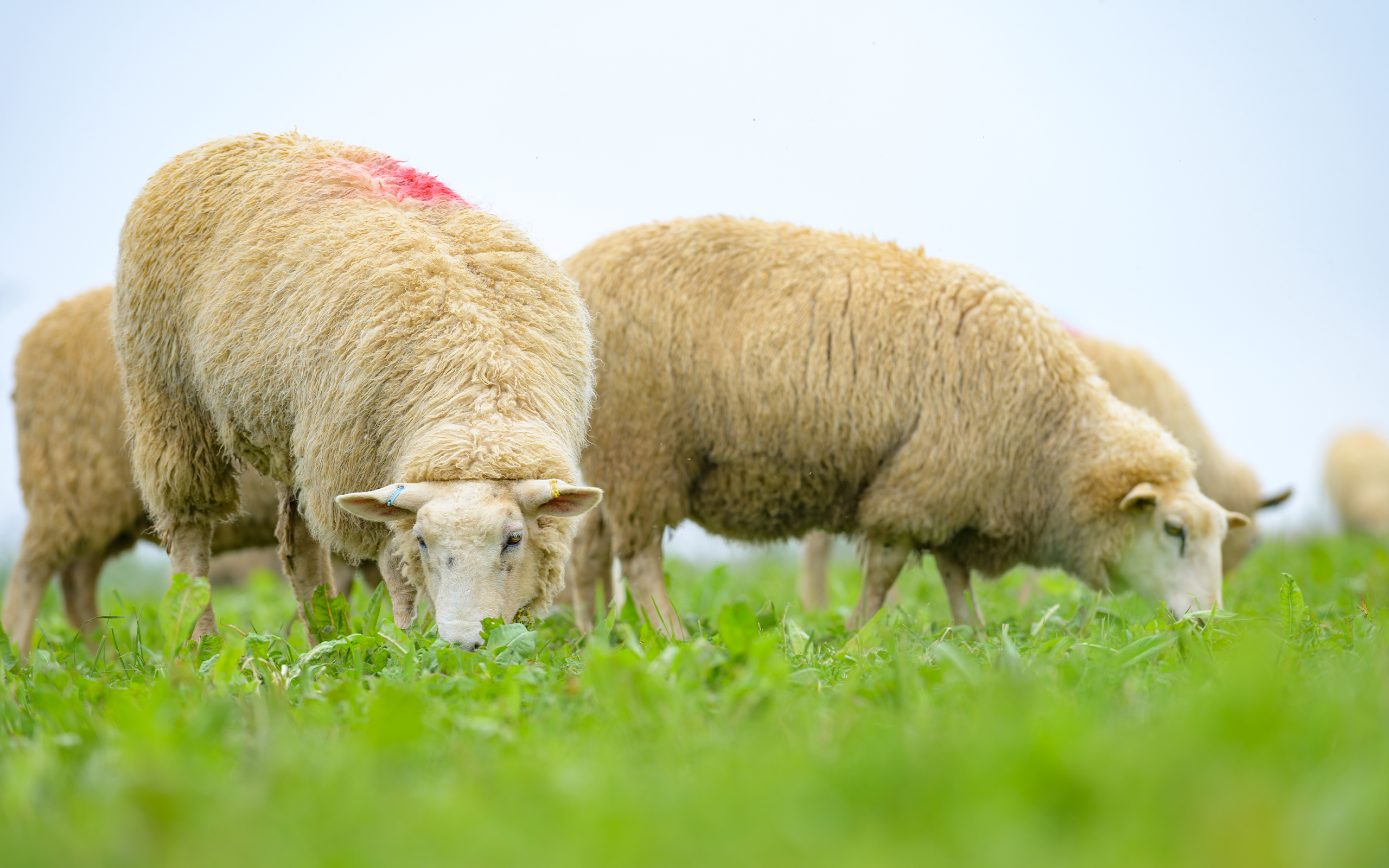
Spring is the most beautiful season on the farm, the hedges frothed with hawthorn, the sky alive with birdsong and clouds of blossom and grazing sheep in the orchard.
Sheep and Skylarks
The sheep are back and this year we have had two flocks for a while. Sheep play a vital role in improving soil health in our regenerative system. One flock has been grazing the orchard but we also needed the herbal leys grazed, so local farmer, Ed Adams, brought over another flock to help us get on top of the grazing. The sheep are Highlanders, a New Zealand breed that's good on grass. They’re Ed’s replacement breeding stock, one-year-old ewes that will lamb next year and they will be with us until the end of October.
A pair of skylarks have built their nest in our rotation plot two. They’re ground-nesting birds so we’ve fenced off the area to protect them from the sheep.
Heritage Wheat and Rye
Crops of heritage wheat and rye went in last autumn on the herbal ley rotation. The heritage wheat was sown after a crop of soil-improving herbal ley and the heritage rye went in after heritage wheat.
We’ve grown conventional rye before but this is our first year of heritage rye. We’re also trialling cultivations. Fifty percent of each field has been ploughed and power harrowed and the other fifty per cent has been cultivated with the vibroflex cultivator. We need to cultivate because we don’t use herbicides on our eight year rotation. We used to plough and power harrow everything but we’ve had our soil tested and while we're building the soil structure up with the herbal leys we need to make sure cultivations are having the least possible impact on that. If it’s a wet year we’ll get more weeds, so we need to see whether we can get away with doing lighter cultivations with the vibroflex.
Harvest will happen at the end of July, after which the wheat and rye will be taken to the mill nearby, at Bruen, before coming back to the FarmED Cafe for Aga to use for baking bread and cakes.
Peas Please
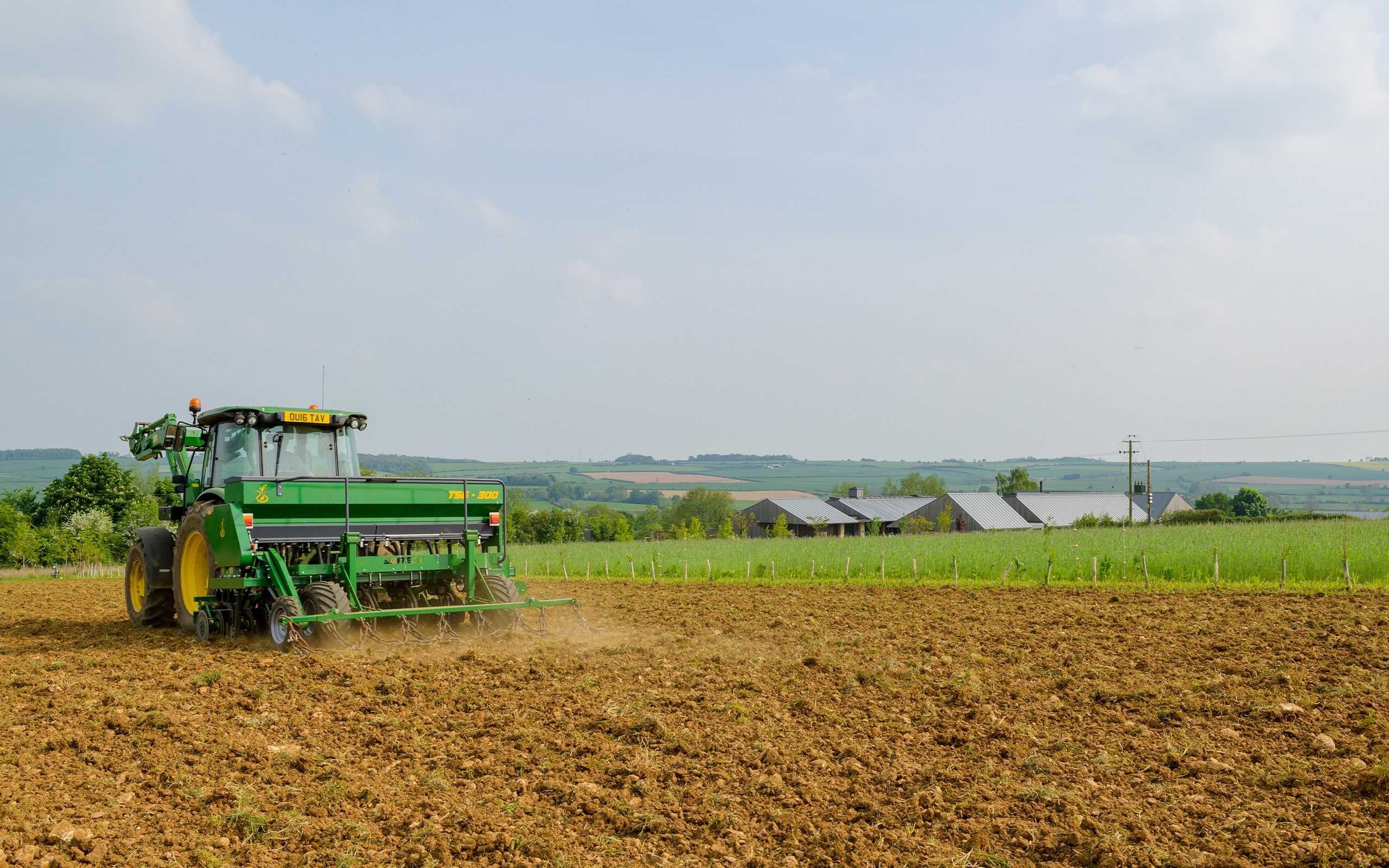
We’ve split plot six in half, growing hemp in one half and carlin peas in the other.
Hodmedod’s, who source and supply British grown pulses, describe Carlin peas as, ‘one of Britain’s best kept secrets.’ A carlin pea is like a cross between a lentil and a chickpea and is also known as a black badger pea. They are traditionally eaten as Parched Peas but can be added to stews and used to make dahl and hummus. Carlin peas aren't commonly grown in this country as historically, we don’t have a big market for pulses.
We haven’t grown peas before at FarmED but as a demonstration farm, we’ve got to keep trying new things. One of our reasons for growing carlin peas is that we wanted to produce a protein crop and carlin peas are also a great source of fibre, which most of us don’t get enough of. It’s something else that we can use in the Cafe rather than buying in. We’re self-sufficient in veg and we also produce wheat and rye but we use a lot of pulses in the cafe and until now, we’ve not grown any of them ourselves.
It will be a steep learning curve for us. We don’t know how the peas are going to grow in our soil type, or if they are going to be affected by predators or disease and lack of rain might be a big challenge.
Hemp
We’re also hoping to serve homegrown hemp seeds in the FarmED Cafe soon. This year is our second year of growing hemp. You can't grow a crop of hemp and plant the seeds it produces because this breeding can increase THC levels (the psychoactive component). But you can grow a crop and eat the seed. Our baker, Aga, makes hemp flour and she's looking at making hemp milks.
Chickens and Eggs
Eggs are now back on the Cafe menu! Our chickens have moved into the kitchen garden where they’re busy grazing the cover crop - again, putting fertility back into the soil.
Naughty Goats
Kate’s goats are up to more mischief, taking their collars off! The goats are in the blackthorn a lot of the time, where their no fence collars get caught on the branches, and for safety reasons, become detached from the goats!
If you’re interested in learning more about keeping goats and meeting ours, why not book onto the Goats for Beginners course, led by Kate, in a few weeks.
Recent news items