

The FarmED Podcast with Entomologist and Hawkstone Choir Member, Sally-Ann Spence
May 22, 2026
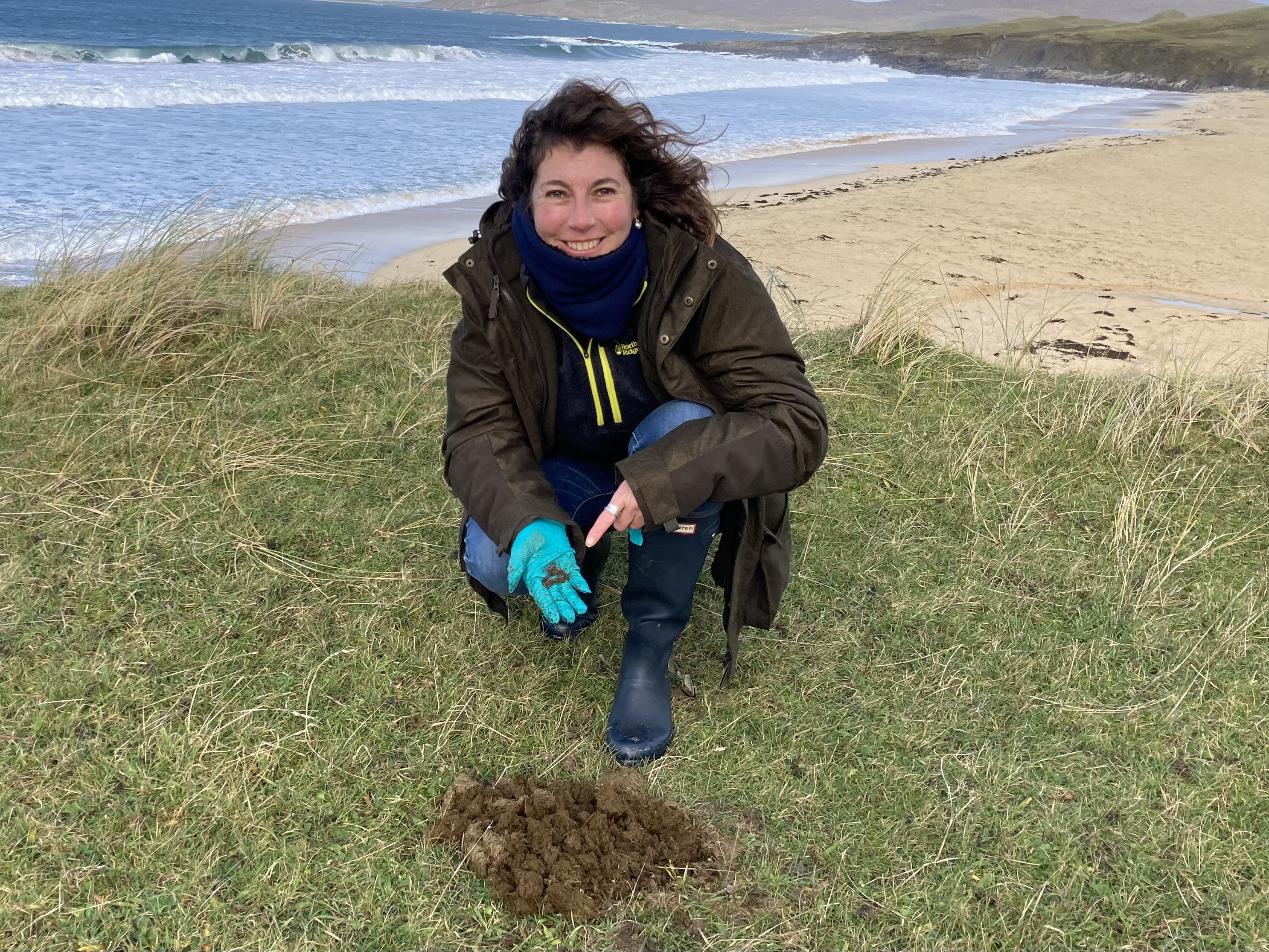
This month, Alex is joined by science communicator Sally-Ann Spence who has spent many years enthusing people about the wonders of the natural world. Her boundless passion for the earth sciences has taken her from being a dung beetle expert to ecology, archaeology, paleontology and travelling to fourteen different countries last year exploring sustainable farming. She’s also a member of the fabulous Hawkstone Choir who we hosted at FarmED for rehearsals ahead of their next big day on Britain's Got Talent!
The conversation covers why dung beetles are ‘awesome’ to an exciting Mesolithing burial ground in Germany that’s revealing all kinds of fascinating facts about the ecology of the soil in this period. Sally recounts tales of her travels to Estonia where farmers have to tackle the issue of bears ‘ripping plastic off silage bales’ and details her wishlist that includes grant funding for vets to carry out faecal egg counts and help for young farmers to travel the world to bring back ideas from other countries and cultures.
‘I'm in my 50s now, and, you know, the one thing I have learned is how little I know, and how exciting the world is, and how much more there is to know,’ enthuses Sally-Ann. ‘And every time you turn something over, you learn more, or it exposes a gap in your knowledge. There's just so much to learn. ‘
It’s an inspiring conversation!
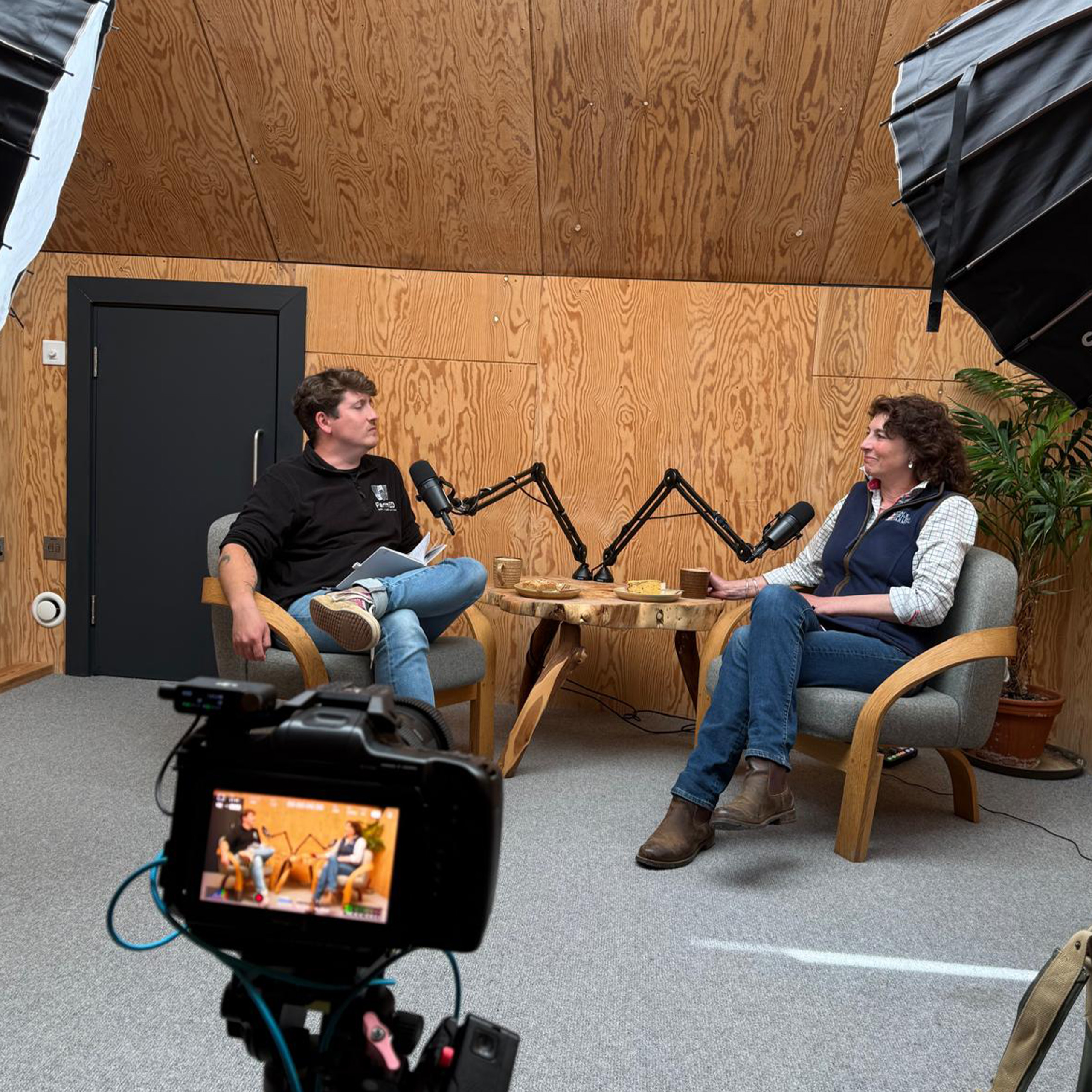
Listen wherever you get your podcasts or watch on FarmED’s YouTube channel.
Link: https://www.berrycrofthub.com/hub-founder.html
Full Transcript (Automatically generated)
Alex: Welcome to the farm for another edition of The FarmED Podcast. My name is Alex and I’m wearing insect themed socks today and my guest today is communicator, dung beetle expert, archaeologist, singer, I mean there's so many strings to your bow, Sally-Ann Spence.
Sally-Ann: Hello, Alex, how are you?
Alex: Well, thank you/. How are you?
Sally-Ann: I’m very well. Thank you for inviting me to your podcast, really excited about this.
Alex: Lovely to have you here.
Sally-Ann: Slightly terrified but very excited.
Alex: Good that's always the way we like. So how would you define yourself? I've already mentioned how many different things you do, and that's only scratching the surface.
Sally-Ann: So one of the things I've sort of thought about is if anyone ever Googled me, if my great -great -great -great -great grandchildren Google me, and if we still have Google, they will find probably many pictures of me with my hands full of cow poo, or any other animal poo, basically. And that seems to be where my sort of defining moment that's been in life.
Alex: Is that a legacy you're proud of?
Sally-Ann: I am very proud of that legacy. Yes, I am. But I'm often described as a polymath, which is a great word. And I hadn't actually heard this word until someone else described me as a polymath, because they didn't know what box to put me in. So yeah.
Alex: So we've already mentioned that you sort of do a little bit of everything. What sort of things do you get involved with?
Sally-Ann: I'm interested in systems and I have a massive interest in everything. That's my, it's my driving force, but it's also my disability in many ways because I just cannot, you know, I'm just so interested in life, but it's all so connected. So I work within archaeology. Well, actually, let's start at the beginning. I work within agriculture. And an offspin of that is obviously the entomology and the ecology, because if you're working in entomology, you have to be involved in ecology, basically. That then takes me into archaeology, but I'm actually looking more at the Mesolithic period, which is post last ice age before humans were farming. And then from that, I sort of go into paleontology, which leads into geology. So they're all earth sciences, really.
I know agriculture is sort of slightly out of earth sciences, but they're all based around the earth. I mean, you don't get more soil based than agriculture, but they're all connected. And so it's that chasing the understanding of how these things are interconnected that has led me down these many different paths. And then other million different ways I've diversified to make a little bit of cash to support me learning all these different things as I go, basically.
Alex: So how did you get involved with all of these different things? You've described pretty much everything from the bottom of the soil right to above the... pretty much everything on the planet very nearly.
Sally-Ann: Curiosity. You start on one subject and I get sort of hyper -focused on something and then I just need to learn more and more about it, and then how it connects into the next thing. And one thing I'm learning, you know, I'm in my 50s now, and, you know, the one thing I have learned is how little I know, and how exciting the world is, and how much more there is to know. And every time you turn something over, you learn more, or it exposes a gap in your knowledge. And by no means do I know enough. As I said, I'm just scratching the surface on stuff, but there's just so much to learn. And I mean, you're in entomology. That's how you and I met. Don't you find that that is a subject that just goes on and on and on? Well, I mean, they say that about everything, don't they? You can never know more than about 10 % of your chosen area. And I mean, with things like entomology, it's got to be less than 10 % surely. Oh, it's such a huge subject. You have to specialize in it. And when I was specializing, I've come from an agricultural background. I've always been in agriculture. And I just wanted to look at something that would be beneficial within the agricultural industry. So you had entomology at that point was more down the pest route, shall we say? Pest and parasite, that sort of thing. And I was looking at something that would have a much more positive impact.
My heartbeat in agriculture is livestock. I absolutely love working with livestock. And I wanted to look at pastoral systems because we didn't have the leys and all this other way that people were grazing now. That wasn't happening 30 years ago, really. And so I wanted to look at something that was positive and beneficial, which ended up being dung beetles. And then, as I said, that hyper focus starts and off I go. And I was very lucky the people I met that enabled me to really go into that subject. And it just opened a can of worms in many respects that we're still learning. I mean at the moment there's so much work I'm doing on dung beetles at the moment, which I can't tell you too much about because it's unpublished.
Alex: Absolutely.
Sally-Ann: But we do have an amazingly new understanding. It's going to blow a lot of things out of the water about dung beetles and their actual impact. I work in so many different fields, you know, I've got my welly boot on one foot and I've got my, my lap sock if you like on the other all the time so I work in academia as well as in the practical field. So yeah, it's a different set up on that one. But we are at a stage now where we're understanding so much more.
Alex: On a very basic level then, let's go as surface level as we can.
Sally-Ann: Dung beetles. Yes. They're awesome. That's all you need to know. They're awesome. Just take that away from this entire podcast and I'll be happy.
Alex: Agreed. I'm with you on that. I second that. But why should anyone care? Why are we interested in dung beetles? What do they do that's of any importance?
Sally-Ann: Well, dung beetles are what we call a keystone species. They're ecosystem engineers. And basically, dung beetles are a very complex group. We've actually simplified them, not because we don't think people can understand the complexities, it's just that it does just go on and on and on. So many dung beetle species can be found in carrion and fungus and things like that alongside dung. So it's where do you start, where do you stop?
So we've just said, right, you know, my interest is in the ones that are actually breaking down the dung piles in the field. So your cattle and your sheep are producing, and horses, llamas, whatever else you're keeping, are producing dung. And if that sits on the surface, and has no interaction with dung beetles or other insect life that come in because it's a whole ecology. There's a whole ecosystem going on in that dung pat. That's how we met. Yes, it is.
Alex: Not in a dung pat. No. Well, we did. We spent a lot of time poking through dung pats together, I think, didn't we? That is true, yeah. Was it maggots?
Sally-Ann: I think it was maggots. It was flies, yeah. That's right. Maggots.
Alex: We met over maggots. That's so cute. What a sentence that is. Yeah. How romantic.
Sally-Ann: But basically you get a different dung for so you've got to think of dung as the tiny thing, so you've got that lovely green and blue planet, you zoom in and then you're going down to countries, continents and all the rest, zoom in a bit more, you're going down to this sort of urban areas and your grasslands and your woodland and zoom in more and more until eventually you come down to that field. And for the sake of this, we'll say that they're on just a normal grass field. And then you want to zoom in on one dung pat in that field. Now that dung pat could potentially be in a different temperature, different sunlight, all sorts of different things, different soil and everything, to another dung pat the other side of the field. And some of these dung beetles are so specific, so specialist, that they'll only feed or breed in one particular dung pat. If it's got a certain soil under it, if it's got a certain amount of grass under it, or even if it's on bare soil, you get certain different species that will go.
You know, all these different things have an impact on them because they're tiny. So that dung pat is a micro -habitat. And it's just bustling, it should be bustling. So basically, a cow pat lasts much longer. So you get a slightly different dung fauna community inside a cow pat than you do something like a sheep or deer that can disappear much, much quicker.
So you've got some like that, but some that have specialisms, you get some called typhaeus, which is the minotaur beetle, really nice, lovely horns on it, quite a big beetle. And that likes dung that's in a round shape. So it'll go to sheep and deer dung very often. It will occasionally feed on others, but it prefers it when it's done in a round shape. And then we say, well, we've got dung beetles that live in dungpats. That means that they're breeding. They're laying their eggs inside dungpats. We call them the dwellers. And then the ones that go underneath, we call them the tunnellers because they come along and they make their tunnel and the rest of it. But there's actually a little bit of practicism that goes on. And there's all sorts of other things. So we simplify the dung beetles, but they are a lot more complex. In terms of our soils, then, so we're all about the soil.
Alex: It starts with the soil. Yes, it does. Yes. Why are they beneficial for our soils?
Sally-Ann: So they do a whole load of different things. If that dung pad sits on the surface, it's not being incorporated in the ground and if it's got no insect life going on there, as in the dung beetles insect trigger the whole thing that goes on there, then that is going to have to go through a much longer system to break down which will be weathering, it'll be fungal you know it's all that sort of thing going on so it takes it's just much longer and it can take months it's you know longer however if you have the dung beetles coming in they start to mix the dung up with the soil as well, some of them are taking this dung straight down to make into brood balls and feed down underground and everything else. Others are mixing it up, we call that bioturbation, they're mixing up the soils, the dung and the soil. And they're drying the dung pad out as well. So what they're doing is making that dung more available to things like earthworms and other soil invertebrates, because the soil is a living organism an entity, as you know, and they're also incorporating the nutrients and nitrogen and everything else into the ground, ready for the plant root uptake.
So really, really important. Prevents pollution. It nails that organic matter into the soil. the bioturbation, the tunneling and everything else, that's aeration, that's allowing water to travel through. All these incredible ecosystem functions are happening because of the dung beetle behaviour. And if you didn't have that happening, then as I said, you're looking at a dung patch just sitting there on the surface for a phenomenal amount of time. That's a huge waste and it's also stopping carbon sequestering.
Alex: So you get that carpet in the ground. What else does it do? My mind's momentarily blank, but it does do an awful lot of things. Do they have an effect on, say, if you've got sheep, like fly strike and things like that?
Sally-Ann: Yes, they do. Parasite management is really good with dung beetles because... How can I put it? Right. Not parasite management. I have to cut that bit. Not parasite management. What is it it's called? Parasite suppression. Right, so yes they do parasite suppression. So the adult dung beetles are drying out the dung pat and you have a lot of parasites that pass through the animal's intestine and they are deposited with the dung in a larval stage, and they will continue their development, and they'll do that very often in the sort of watery film, if you like. And then they'll migrate off into the grass, and they'll be consumed again by the animal, and they'll just continue this wonderful parasite cycle.
Parasites are cool, too. But basically, the dung beetle's dried out, and they inhibit the larvae, and it cannot continue the life cycle. Habitat's not suitable, dies off. They also carry these little phoretic mites. They're really, really amazing. They're little tiny mites. You can see them with the naked eye. And some of them will travel on the dung beetle as an adult. Some will glue themselves with a little protein thread to these dung beetles. You've got to remember everything is really tiny in their world, and they cannot travel around. They haven't got wings, and a field is a massive place when you're tiny. And they are predatory, so they're eating nematodes and fly maggots and all these sorts of things, because if those things are able to increase their life cycle within the dung pad, they are eating the dung and producing their own poo. So it's an unsuitable habitat for those dung beetles to use that dung for their own larvae and for themselves.
So there's a very nice symbiotic relationship where the dung beetles carry these mites to each and every pat. Symbiotic, basically a friendly relationship. They're very happy together. And people often will get in touch with me and say, oh, I found a dung beetle covered in these mites, and I'm really worried about it, so I've pulled them all off. And don't do that. Don't do that. It's really, really important that those two are together. They're really useful.
Alex: It sounds like, from what you've described there, if you can get your dung beetles right, if you will, you can sort of protect or look after every part of the farming system. So you've got your soil sorted, you've got your animals' health sorted. So why... This is a natural system.
Sally-Ann: Yeah. It's absolutely beautiful. Nature has wonderful systems that work really, really well. And then we come along, and it's not as simple as saying we come along and we destroy those systems. There's lots of factors that go into it breaking down. because of pressures that we have either in agriculture, in just the food consumption. We've got to go back in history as well and look at the post -war. Post -war, we needed to feed the place. We had all these wonderful chemicals and things coming on the market. We had less labor as well, prices going up already. And our focus was purely on producing food. And our governments at the time, every time a government comes in, they lead how this is done. And they did lead on at that time that this is what we do. No one knew the impacts that these things would have. Because, I mean, my father's generation, and I'm sure the generations before, a lot of little boys and girls had egg collections because birds were everywhere. You know, I remember walking around and seeing birds, absolutely every flock of birds. I took my children away to go and see a flock of birds. You know, it's a totally different, great big flocks of whirling lapwings and all that sort of thing, you know, lovely birds. I'm just trying to think, yellow hammers, goldfinches, turtle doves. All these things were everywhere and it has decreased quite quickly, but we're now understanding the impact we're having with residual effects of these chemicals and things in the environment. But that's not bashing farmers. I'm not going to do that. Because we basically didn't know. And we were being encouraged to use these things. Yeah, we'd been incentivized for a while. Yeah. Now we know. And now we're picking up more and more things because we have the ability and the technology to pick these residual things up and look at the impacts they're having. And it happened so quickly. I think it's, you know, in my lifetime has been a big change. But we still also got an increasing population. It's a really difficult stage of, you know, how do we balance these things? I'm seeing the impacts all over the place. I'm seeing so much positivity as well. And that's a great thing.
If we didn't have this, I won't say awakening, because I think that's wrong as well, but if we didn't have this new understanding of what's happening. We wouldn't have organic farming, regenerative farming, you know, all these different ways that people farm. Even in conventional farming, we've still got, you know, controlled traffic and, you know, because of compaction, everybody's looking at everything. And farmers are obsessed with their soil. The soil, the whole thing about soil is not new, because if you didn't have good soil, you couldn't grow your crops. But now we have a better understanding of how our soils are working and life, the soil biota, the life in the soil, how that is and what is present and why it's so important. And that interaction, like we're saying with dung beetles, bringing that organic matter in for the fungal communities to enable those plant root uptake of all those nutrients, which is really important now because we've got the price of fertilizer going through the roof. We've got resource wars going on, all these different things going on that's going to put more pressure on us. It's how do we get around these things? And this whole farming with nature is now becoming more and more important as we go into a sustainable farming future.
Alex: So you've spoken about dung beetles quite a bit which means you must be very interested in livestock so you want to see more livestock around the UK, the more livestock farming, is that right?
Sally-Ann: Yeah, I mean, livestock is vital. Without livestock, you don't have dung. Without dung, you don't have dung beetles. And without the dung beetles and all that biodiversity within that dung pat, you don't support the next stages up on the trophic pyramid, which is basically your birds, your reptiles, and a whole lot, mammals, everything. At the moment, the poultry and the pig industry has a permit system in place, and they're talking about how it might come to the dairy and beef industry as well.
And again, with dairy farmers under pressure and all these different things at the moment, the beef price has been holding quite well. But I want to see the livestock industry supported with animals outside as much as possible. Now, I know we touched on the biosecurity side of things and everything else in these systems that are going indoors. And a lot of the grants, actually, a lot of these schemes, sorry, not grants, schemes, a lot of these schemes are very much sort of, you know, can't have animals out all year, must be indoors part of the year. Some places you can't have animals out all year because the soil won't take it and you'll damage it, because farming, you're always thinking about your soils and crops in the future. So, but, you know, I would like to see as much as possible outdoors because you remove that dung, it's habitat loss.
So when you remove livestock completely, you're fragmenting where these animals, these insects can fly to and get to. You're reducing their numbers because you've fragmented their habitat. If you remove the animals completely, boom, habitat loss. None of these invertebrates are there. If you have these animals indoors half the year, then you're taking out half the year's chunk of these insects and their life cycles and things as well, their species groups and things.
So what you're doing all the time by not having livestock outside and not having livestock dotted all over the place, which we've done previously with mixed farming and pre -farming had animals just migrating all over the UK, you are reducing your invertebrate load in the dung and therefore you're reducing your invertebrate load going up through the food pyramid. So yeah, I want to see livestock out and I want to see the livestock industry supported. Horses for courses, what you keep outside. We have conservation grazing and everything else, but that's a very small part of the percentage of the UK. Some areas traditionally have been livestock low because they're grain areas, grain growing areas or they're vegetable growing areas or you know everything else and some other areas have been quite traditionally high because they're hillsides or anything like that.
We had hedge payment days when there was a lot of livestock out but ever since that time our livestock started to plummet and with it goes a massive amount of biodiversity that supports everything else. And we don't just think about bird life and things that we have bats, badgers, foxes, and everything else. We'll also talk about the transient ones for our migratory birds that are coming through and what's supporting them. So livestock and wildlife walk hand in hand. So I would like to, yeah, I'm a big supporter of livestock and livestock outside where it can be possibly done. Great.
Alex: In terms of your sustainable farming credentials then. I know that you've been a bit here, there and everywhere around the world looking at farming systems and how they're working in different places. Is there anything that you've seen on your travels that you thought hit home? Either particularly impressed by or surprised by, disappointed, whatever it might be?
Sally-Ann: I've been really lucky. Last year, I think it was, 14 countries, I managed to talk to farmers in 14 countries. And not just farming as we think of farming, dairying and pigs and things like that, but also herding, herding reindeer and things. I've been surprised about herding reindeer up in the Arctic.
Alex: Is that Santa?
Sally-Ann: That's not Santa's reindeer, I'm afraid. I did go to Santaland. That was another experience. I didn't mean to. I got lost on the sat -nav and ended up in Santaland, as you do in the middle of the Arctic winter. What am I seeing? All sorts of bizarre things. Estonia, working out there on their organic beef production. system that go on out there, which was very interesting because you're looking at what's left over from a post -war scenario. They only got part of their country back in 1999, I think it was, and so they're sort of restarting their production ever since. And, you know, just one thing stayed with me for a long time. They have a problem with bears ripping the plastic on their silage bales. You know, that's not something we come across in the UK very much. Up in the Alps, up there, climate change, the impacts that that's now putting on farming, I'm seeing that when I traveled around, that was a big thing I was seeing. So up in the sort of alpine regions where the tree line is coming up and the alpine meadows are very, very important, very, very important, especially for carbon sequestering and all sorts of different things, rare species up there because we're getting rare species because we've got less of these habitats. The trees are coming up, the tree lines coming up, taking over. on these pastures, which are your ski slopes very often, people go skiing on those. And then, of course, you've got rocks, so the alpine plants can't move up as such.
And so they're trying to restart having the cattle and making sure the cattle and goats and sheep and things are still up there for a certain amount of the year. And if they do that, then they've got to produce things like cheese, because you can't get a bulk tanker up there. And it's a very different life and how you keep a modern family in that sort of way of life and then the impacts I was looking at that they were doing with how everything's changing, just there's so much change going on around the world and how it's impacting on these small family farms in particular that I worry about sometimes because our small family farms are often where our diversity is and diversity is good, it keeps us strong.
Alex: So we're seeing that lots of smaller farmers are starting to struggle because of these struggles. Do you think? That was a good sentence, wasn't it? Struggle because of these struggles. Do you think a lot of farms are starting to consider diversifying in some way?
Sally-Ann: Yeah, definitely. I think everybody's diversifying, large and small. We've got some really big estates that have all got their biogesters and various other things and are looking at different crops. I think we're going to look at different crops. We're going to have to look at different crops. Our resilience is going to become in our genetics, both in our plants and our animals. I do think that's the way forward, definitely. When I talk about the dung beetles, I run a lot of workshops and training and I do a lot of work in more sustainable parasite management to reduce treatments because I look at the environmental residues of these treatments as well. And a lot of the time... it's more of a case of the wrong animal in the wrong system. And that's sometimes locked in because it might be a herd book or someone's taken on a breed that has been in the family so they've just made a few wrong choices and now they're locked into something, that breed. Very often with smaller farms, it's not one person's decision, it's a group decision, and there's an overriding hierarchy that might not go with that decision, that has a final say. So I think we just need to be, I won't say adaptive, because I think farmers are the most adaptive group of people I've ever come across, but I think we need to be more, fluid. You only have to look at the way vineyards are spreading now up the east coast Kent, Essex, Suffolk, Norfolk you know and coming inland and things. I've got farmers in East Anglia who are finding it drier for irrigation and of course you've got more input. You know control over irrigation and everything. You've got all sorts of things changing now. The West country is going to become more of our grain bowl, and soya's coming in. There'll be more and more work done on soya, so we can start growing that better.
Things are changing rapidly, and I think for people to be able to farm in a sustainable future, and a farm business sustainability, not just environmentally or anything else, is you're going to have to be fluid with your decisions and changeable. But also it's very hard when you're investing. We're losing dairies hand over foot. And then we've also got other dairies who are investing heavily. And that's a very scary position to be in too. So I think farming is going through the biggest change it's been in since the industrial revolution as far as I'm concerned. And now you've got our knowledge of what our impacts are thrown into the mix as well. What sort of areas are these dairies moving in or investing in? We've got dairies that are moving hugely into robotics and becoming larger, but very often than keeping cows inside more and whole cropping in, making it much more, how would I put it? I'm trying to think of the word. What is the word? Help me, Alex. You poor thing editing this. What is the word? It's a whole system. It's a closed system. So they're trying to make a more closed system, more biosecure system and all that sort of thing. And this is changing our landscape as a result. So I, again, going back to a lot of things that I do, I'm pinging everywhere. A lot of things I go into is looking at landscapes and the impacts of landscapes. We've got a lot of schemes now, landscape recovery schemes and things like that, but it's very good to have an understanding of what is a landscape and how these things interact and how small things can change, have a big change.
So with a lot of livestock going indoors, we talk about, oh, you know, with the British herd, the national herd, the national flock has actually got X number of animals. So it should be great, but actually from a biodiversity point of view, those animals are housed either for half the year or all the year which means going back to our dung fauna and our dung beetles and everything else. If that dung is not out there, then we've lost a massive amount of volume of invertebrates, which is of course at the bottom of the trophic level, above plants, that is supporting all the wildlife above.
Alex: But if people are farming these animals indoors and say they're using their robotics to collect the slurry or whatever it might be, is that not, if they then go out and spray that on their arable fields, does that have an effect on the dung beetle?
Sally-Ann: So slurry is an interesting one. Dung beetles do not go in and feed on slurry. Slurry is a very difficult one, full stop. The problem you've got with farming, the environment, you know, everything is a complexity of it. If you're gonna have cattle and you're having dairy cattle and things, and if you've got a pig unit and all this, slurry, you're gonna have your inputs, you're gonna have your middle thing, which is your animal, and then you're gonna have your outputs. And what do we do with it?
And this is a big problem, yes. We've got, you know, lots and lots of different controls on how this end product is dealt with. And there's units that are now working more and more with you looking at it, it's biogesters and things like that as well, and turning it into energy back into the farming system. But not everybody can afford these setups. Grants are, we're going to go down a sticky road here now, Alex, with how grants work and everything else. There's not always the best of joined up you know, in grants.
I think it's important to talk about this because I think the grants, the subsidies side of things are becoming more and more noteworthy in farming. Yeah, I mean we grant, so there's lots of industries that have subsidies in the UK, not just farming. And I often get worried about the subsidy word because I get sort of, as I said, I work in many different camps. And the minute I talk about farming from a farmer's point of view, I get, oh, you get subsidies and everything else. I think most of Europe, a lot of countries, America, everywhere, probably get more subsidies or more will help him financially than we do. But grants and things is an interesting one. Because I've also got people that do a lot on their farms without grant aid. And because I do a bit of farm advisory as well. And I've got other farmers who are desperately trying to get as many sort of grants as they can to help them. It depends on the business as well. And the financial situation of that business. The grant schemes aren't, it’s very difficult.
Alex: How would you like to see some grant schemes? From a dung beetle point of view, can we go down that one? Of course.
Sally-Ann: So for me, I would like to see grants that enable farmers to have the correct weighing machines. There's some brilliant Bluetooth stuff now that works on the applicator. So when you're worming or dredging your animals, when I talk about things like this, I also want to point out that we worm our kittens, our dogs, our horses, children, you know, everything, you know, this is part of animal husbandry. It's not that farmers not want to go around and just worm everything. It's an animal welfare thing, exactly. But when you're running a whole load of sheep, say, on a really hot day, you have to get them through that system quite quickly. And I will be standing in front of you and with my entomological scientist hat on and say, right, I want every individual animal weighed and the applicator set to the exact amount that that animal needs. And I want you to have already pre -tested which animal actually needs worming and all these different things. And it's very easy for me to sit in an office and say that, but I've also been the underside of the fence on the practical side. And when you've got a hot day and you've got, you've just got all these animals in and it's, it's not a five minute job. You've got to set up all the pens. You've got to make the time for it. You've got to get a team of people in or you've got a dog in or whatever. You've got the animals in the holding pen. You're now running them through. Very often, they're running them through either a kit that hasn't got a weigher or if it has got a weigher, they've got electronic tags and they can't use a Bluetooth applicator would be ideal.
We have got these things coming on the market, they are starting, but I want to see money going into things like that because that will reduce hugely and it will help us with resistance to parasites. If you could have every individual animal quickly taken through with the right dose, that would be fantastic.
I want to see, I would like to see, this is my wish list, okay, I'd like to see grant funding that goes to vets, so that vets get paid to do free faecal egg testing, in my perfect world, they're the sort of grants I want to see in place, so that farmers have the handling equipment, they have the right equipment, they get the screening to prevent and monitor, you know, all these sort of things. Yeah, that's where I would like to be. I've got a wish list of things I'd like to see on grants.
Alex: Good. What do you think is required to get us to that point? Do you think we just need to research to prove that these things work? Or do you think it just needs more understanding from people higher up in the system to encourage it and to subsidise it?
Sally-Ann: Oh golly. I think it needs, sometimes it needs more understanding from the point of view of if you could be out on a farm and actually spend, I think everybody ought to spend a year or a farming year and really experience a weekly thing. Because it's very difficult when you've got everybody shouting at you to, you know, I can go on a farm and say, right, this is what you've got to do for your dung beetles. And I can do a whole day's training and you will go away and yeah, absolutely, you will have a better understanding. And it will help you and it will help you with lots of different ways. But it'll save you money too. And that's always good.
Any business wants to save money. But also, I could go on the farm and do the same about butterflies or, you know, certain things in pond lives or, you know, this sort of thing. And then you've got someone else going on the farm wanting you to do something about trees and somebody else wanting to do something about your stone walls. Farmers have a phenomenal amount of people wanting to get involved in their farms and with lots and lots of information for them. And there's some really good information out there. There's loads of apps that they can use as well.
But at the end of the day, they're one person. trying to do one day where they get up early in the morning, they finish late at night, they still haven't finished all their daily jobs anyway, the weather changed, they had to change what jobs they were doing, something broke down, something got out, you know, they've got meetings as well on other things, you know, there's so much going on on a farm on a daily basis that I think sometimes, you know, they're chasing their tail and they can't keep up with all these things either. Someone said to me about the Farmers Weekly, he said, you know, the Farmers Weekly is a very important journal in the farming world, comes out weekly on a Friday, you know, and they said the place that they reckon it's read the most is in the toilet, because that's the only place. that these people get to sit down and actually have five minutes themselves. You know, it's crazy being a farmer. It's crazy busy, no matter whether you're arable, mixed, livestock, what you are. It's a crazy thing. So you're being hit by all these suggestions, these ideas, you need to go to this meeting, you need to go to this event, you know, you need all these different things going on. And then you've got all these schemes coming at you as well. And then you've got to get in quick. And they're changing as well. Didn't we just see that happen? You know, all these things all the time. I just don't know how you keep track of it all. It's just too, it's so much. So yeah, another thing, I'd love to see funding. I'd love to see funding for smaller farms to access help, you know, farm secretary type help. A lot of farms do have farm secretaries, a lot of farms have a different staffing structure. Others, it's just one chap doing everything or chapess doing everything. So that would be something very good. I mean, yeah. a huge range of grants out now. And you'll always have those that go for it, those that won't bother, those that might slightly abuse it. It's human nature. But there are a whole load of things coming out. A lot of my workshops are FIPL grant funded.
Alex: FIPL is what is FIPL? Farming in Protected Landscapes.
Sally-Ann: Yes, let's say that. So FIPL is Farming in Protected Landscapes. And it's been a brilliant grant, but it's that's always sort of, is it going to continue? Is it not? Farmer Cluster Groups, amazing. Absolutely fantastic. I am so supportive of Farmer Cluster Groups because it's enabled us to get the science directly to the people. I don't want to be messing around anymore. I want to get information directly to grassroots and make a difference. And that's what FIPL has enabled with the cluster groups. Not all of them are FIPL funded, but some of them are. Grant aiding has been brilliant, but like everything, it's not perfect.
Alex: Is there anything specific that grants could provide for in the future?
Sally-Ann: Well, I've got a grant that no one's ever thought of. Well, I don't know. There's lots of funding for this, and you can apply for funding. But I would love to see a actual grant from the government that means that those youngsters that are going into farming are grant funded. They don't necessarily have to, you know, because there are, as I said, there are, all right, let me just say, I'd like to see a grant that is, almost compulsory, shall we say, for youngsters that are going into farming, and this gets in a grey area of, you know, first -time entrants, older people going into farming or anything else, but I'm going to go with the youngsters, who will be grant -aided to go off around the world and work within other farming systems around the world. Because I think it's so important to travel, have your mind opened as to how other people do things. That's going to be so important now when we're going into a rapidly changing environment, both politically and climatically and everything else. And then they come back a little bit more equipped to go back into their farming systems or start a farming system with a different viewpoint than going straight from university I know a lot of them go off and they work on farms, some of them go off and do their year in Australia or whatever, you know, but time and time again, I meet people say, oh, well, when I was traveling, I came back and I changed my family system. And it's very hard often, we've talked about this for youngsters to come back and change, bringing change into family systems. But many of them are, but it just expands their ability to see the problems and the issues from a different way. And I think if you travel around these different countries that are already trying their different ways of how to cope with the changing times, it's good to bring that back, mix that up, bring it home. And I think that will help our farms be a lot more resilient if we're more able to open up to people being able to experience more and then come home.
Alex: So farming is a busy old business and quite often it's quite a lonely business as well. But Just recently, we've seen there have been some farmers who have been meeting up every now and then as part of, can we talk about the Hawkstone Farmers' Choir? I think the Hawkstone Farmers' Choir. Hawkstone Farmers' Choir. How did you come to get involved, to be involved with the Farmers' Choir, Hawkstone Farmers' Choir?
Sally-Ann: That was another mad moment. So I'm quite prone to, something comes along and it appeals to me just saying, oh yeah, I'll go for that. And I was in a choir at school. I love singing. I do a lot of miles and I do like my music. I never thought I was a particularly brilliant singer. In fact, I still don't think I am. However, this advert came out on Facebook and I just happened to be in Facebook and it said wanting people related to agriculture to form a choir but I think it was to sell an alcoholic beverage. It was really hidden. So I thought, well, why not? And a couple of people had seen it and said, so why don't you go for that? So I thought, all right. So I sent off a little demo, if you like, a little audition of myself singing. And I decided to sing because I said, look, farming's all about the weather. So I sung, I can see clearly now the rain has gone. And it was one of those times when we were just so much rain, everyone was constantly going around saying, oh, there's so much rain, when's it going to stop? And now, of course, we're flip the coin, it's so dry, when are we going to get some rain? And I got an email back and that was the beginning of, yeah, being involved in the Hawkstone Farmer's Choir. So we went, we met at The Farmers’s Dog and we learnt, we literally met and sung, learnt and sung in about two days, I think it was two days, for Mr Clarkson's Beverages, the Hawkstone Beverages, and it was fantastic because the group of people, we just gelled as a group. and we've got really close. Something about singing in a choir that brings you really close. And then it was decided, why don't we have a go at Britain's Got Talent, which is hilarious. Absolutely hilarious. I'd never even seen the programme before. Hardly ever watched television. Hadn't got a clue what it was. Didn't know who the judges were.I knew about Amanda Holden and heard about Simon Cowell, but you know. So we went along to that and got together and it's quite hard logistically for us all to get together because everybody's all over the place and some people are just flat out farming and for them to get away from their farms is very hard. Others are in Northumberland and everything else but we did a quick get together not far from here actually and did some practicing and next thing found ourselves on the stage in I think it was was it Manchester or Birmingham I can't even remember now yeah it was a blur it's all a blur and we got the golden buzzer. And it's just surreal. I mean, it's awesome. It's really awesome. And it's so nice to be doing something positive for farming. I've been up in London, you know, at a couple of the demonstrations up there for, you know, various things. And this has just got such a great vibe about it. And it's passionate. We're singing from the heart. And yes, we are, you know, we are, in many ways we are, We're supporting mental health charities and bringing that into the forefront. We're highlighting that. And it's not just in farming, it's in the rural communities. And that's a really passionate subject to me because I've lost a very good friend with that, and I've lost other friends. My first friend that I lost, who just couldn't see a way forward, was at agricultural college and that has stayed with me for a very long time, it's still with me now, and I've lost other people since. And, you know, farming is hard. It really is hard and it is lonely and it's lonely for women as well as men and I think often when we talk about mental health in farming we often focus on the men and because they've got seen as having all the financial pressure and being alone in the tractor cab and you know all this sort of thing um and they are I'm not knocking that there's there's a lot of that that's out there but also you know farming is a bit traditional, the women still very much are sort of you know in the supporting act and we've got many female farmers now and more you know it's it's really starting to get more and more of that and that's awesome um but we still got that that sort of one partner often staying at home long hours often moving to an area that they didn't grow up in, moving into a family home that's quite, you know, different from what they used to, and all sorts of different things. So the mental health is for men and women in the rural communities. You know as farming and wider so it's great yeah I'm really pleased that we can support that and get that message out there and help those charities because if we do really well in Britain's Got Talent then we will be donating lots of money towards these charities.
Alex: Fantastic yeah I think it's been great to see these farmers like you say from all parts of the country who get the opportunity to come together and want to come together and sing.
Sally-Ann: It's so emotional when you're singing together. The tears at the end of the semi -finals when the camera pans around and we're all like blubbing away on the stage was genuine. The emotion just hit you. And we're really supportive of each other as a group, really supportive and when we spent three days recently together to rehearse and and get our songs right for the semi -final and also if we got through to the final we have the most amazingly epic song it's just it's been written for us and it's just going to be incredible so I really really hope we get through but the time we spent together in those three days, it was like being at a wedding or a gathering party where you really genuinely love everybody in the room and you have no beef with anybody.
Alex: Was that a pun? Yeah, the beef with anyone.
Sally-Ann: You're quicker than me there. But it was just so wonderful. And it just really bonds you to what we call a choir family. I'd heard of that terminology, but it wasn't until I was in the choir that I really thought, yeah, this is true. And because we've all got our farming connections, so you've got that thing that bonds you the minute you walk in.The minute you walk in, you're all like, yeah, this is great, and we're doing this together, and we're doing this for the right reasons, and let's just go for it.
Alex: And I think it probably has done a good job of raising a bit of the profile of some of these issues as well, because that first performance, the audition, I don't think I could go on Instagram for a couple of days without it being all over everything that everyone was posting about.
Sally-Ann: It was fantastic. We were blown away by the reaction. I had to put my phone down. And I know everybody in the choir was the same. You just, you know, it was crazy. Absolutely crazy. And it, you know, I got people I haven't heard from, from donkey's years, sort of got in touch. I now know how many people watch Britain's Got Talent, you know. But no, it was absolutely crazy. And the support, the outpouring of love and support that we've had from people who, you know, really didn't have much to do with farming or anything has been amazing. Absolutely incredible. Just, yeah, it's just, blown away, really it has.
Alex: For you personally then, what can people hope to, or what can we hope to see from you in the future? Any interesting, exciting projects coming up to keep an eye on you for?
Sally-Ann: Farming or outside farming?
Alex: Anything you want.
Sally-Ann: Well, I do a little bit of paleontology and I am now an ambassador for the Etches collection in Kimmeridge, in Dorset, and there's some very exciting things coming ahead there. So if you're into your fossils and you're into that, we've got the most amazing Pleiosaur skull that was found on that coastline and we're going to try and find the rest of the body, a skeleton for that so fossilized skeleton so that will be absolutely incredible and I am going to potentially be involved in that. The Etches collection is just amazing. I'm doing some other paleontological stuff as well, so if anybody's into that sort of thing, then yeah, keep an army for that. Archaeology, doing a lot more work with archaeology. I work on an incredibly exciting burial based in Germany, which is Mesolithic, 9 ,000 years old. We're using new technology now to understand more of what was in that burial, because we can analyze tiny, tiny things in the soil that tell us not only what animals and things that were present with her, but what species they are and all that sort of thing, which have long since disappeared. So that tells us a lot about the ecology and the environment, on all sorts of things, so I'm involved in a bit of that, so that's quite exciting. What else we got? There's so much going on. There's some potential trips abroad, which again are based, a lot of climate -based stuff that I'm doing as well, so that's quite interesting. It does all connect. And then in the agriculture, I'm going to be getting a bit louder about about our soils this year, but not soils from where, well, compaction, grasslands, grazing, how we're, we've got that sort of going on carbon and everything, but, but I'm not going to focus so much on that and more on compaction is where I'm going now. And the soil biota. And again, my dung beetles, my dung beetles, she says, I'll share them with everybody, but they are fantastic.
Yeah. So a lot more work on that. I'm a legacy person and I want to make sure that the dung beetle side of things is in a better state by the time I go than it is now. So I'm pushing on that quite heavily. I've got a lot of other things coming through. Yeah, it's just lots, lots.
Alex: It sounds like it. Yeah, loads. Are you going to have a day off at any point during this?
Sally-Ann: No, a day off for me is learning, doing something. Literally, I was just down on mine yesterday, so looking at an ore that I didn't even know we extracted in the UK. No, no, definitely not. No, it's about getting faster, actually. Time is getting shorter. I've got a lot I want to get done, a lot that I need to understand and know and connect. As we started this chat earlier on, the more I'm learning, the more I'm beginning to realize I don't know. So I'm trying to fill in more of those cases. And yeah, it's go, go, go.
Alex: So, I mean, we've touched on about a billion different subjects over the course of this chat. But as we start to round off now, start to cool off this session, what are some things that you would like to see more of in the future of farming? Where do you think we should be aiming?
Sally-Ann: Well, we all talk about the food system, the broken system. And yes, I think there's got to be more of a joined up system, more of a fairer price paid down to the farming, more support for British farming. And, you know, we are importing a lot of things. You know, we are importing things, food that might be produced in a way that we're not able to produce it in the UK because it's been stopped in the UK. And I want to see more fairness that if it can't be produced under the same rules that we have to produce food in this country, we can't buy it in. You know, that's something that I'm quite passionate about. I'd like to see more support again for farming in the British Isles, but I also want to see a more joined -up approach. I don't want to see farming breaking off into fractions. We're all trying to farm in the most nature -friendly, environmentally -friendly, sustainable – you can pick on all those words. But we know we all need to make sure that we have a landscape, an environment that is suitable for our children in the future and their children's children, while still providing food for this larger, you know, population and things. This is really hard to answer. But I'd love to see more in place that enables these systems to work better than they're working at present.
And I don't know how. I mean, very easy to come in here and say, right, we need to join up and make it better. I've pointed out simple things like handling systems with sheep. Technology is there and it's coming through and we need the grant support to enable that technology to be available to everybody. And basically, yes, it's more of a case of making a farming future that is doable. I want to see our small farms as well. I don't want to see giant farms in the States everywhere. They have their place and they're brilliant and everything else, but I want to continue to see small family farms because I think diversity is always key. and resilience for the future and everything else is key in this whole mix of things. I love the fact we have different types of farming in the UK. We need different types of farming in the UK. You cannot farm the same way the same all over this country. We've got different soils, we've got different temperatures, we've got different, you know, just a million different things. That's why we have county breeds of livestock and everything else. So one size doesn't fit all with these grants. So I'd like to see the grants going down the route they're going down, where you can have sort of like the bolt -on ideas, you know, and that sort of thing. It's very difficult, Alex, how to answer that. Yeah, loads of things. I just want to see farming being more supported, and I want farmers to feel that they aren't constantly being hammered from a mental health point of view, let alone actual practical point of view, because British farming is some of the best in the world and they are working very hard. And from me speaking as an ecologist and as an entomologist, not just as an agriculturalist, you know, I am so impressed with how well attended my courses are and how farmers take that away with them and how people are taking stuff on board. And I don't meet farmers who don't want wildlife. I don't. They don't want pests, as we say in inverted commas. Nobody does. But I don't see farmers who don't, you know, who literally don't want wildlife on their farms. That's something I've never come across. And I've been with farmers all over the UK. So that's, you know, positive out there.
And I want more joined up thinking and more people able to access the grants they need. Right, one of the big things, grants that are easy for them to apply for, that would be another thing I would bring out grants that I'd like to see grants made easier to be applied for because I think a lot of the time they're getting lost in the paperwork and getting granted at the right time with the right wording with the right thing you know and that's tying people up in knots making some people afraid to apply for grants - that shouldn't be happening and it's making people not apply for them full stop because they're fear and also they're getting, you know, worried about it, that they've done it wrong and they might get fined or something might go wrong, so you know they might get penalized somehow you know if we could have grant aiding to be easier to apply for and grant aiding that worked synonymously with the industry, great that would be great, fantastic so lots of things we're looking forward to in the future, lots of things.
Alex: What a nice note to end on. Lots of things to think about. Lots of things to think about.
Sally-Ann: Our food industry in this country is on a positive note, I think.
Alex: Good. It's nice to hear.
Sally-Ann: And if people can buy local and buy British and buy seasonal, brilliant. There's more farm shops springing up all over the place. Support them. And if you're buying in your supermarkets, try and go British.
Alex: Lovely.
Sally-Ann: It's not hard.
Alex: Well, thank you very much for that. Thank you very much for the whole chat. Thanks for spending some time with us today. Where can people find you if they want to know more about what you're doing?
Sally-Ann: Just Sally Anne Spence, really. I'm on a whole load of Facebook and Twitter and TikTok and everything, and I'm always under my name.
Alex: Google Sally Ann Spence, she's the one holding the dung pad.
Sally-Ann: I'm the one with my hands in dung pads, smiling away, very happy. Not always with gloves on, but I should do. I get overexcited.
Alex: Thank you very much for checking out this episode of The FarmED Podcast. Do drop us a review, drop us a like if you like what we're doing, and we'll hope to see you again on the next one. Thank you. Bye.
Recent news items