

FarmED’s Healthy Hay
Sep 18, 2026

Our sainfoin crop has fared well in the drought this summer, with aerial photos showing how the strip we grew remained green when all the fields around it were burnt off and brown.
Loosely translated, sainfoin in French means 'Healthy Hay’ and the perennial legume herb, which produces beautiful pink flowers, grows particularly well on thin, alkaline soils like Cotswold brash. During the 17th -19th centuries the distinctive pink flowers once covered a significant proportion of the Cotswolds when it was used to produce forage to feed heavy horses. It fell out of fashion but now farmers are rediscovering it because of its many benefits.
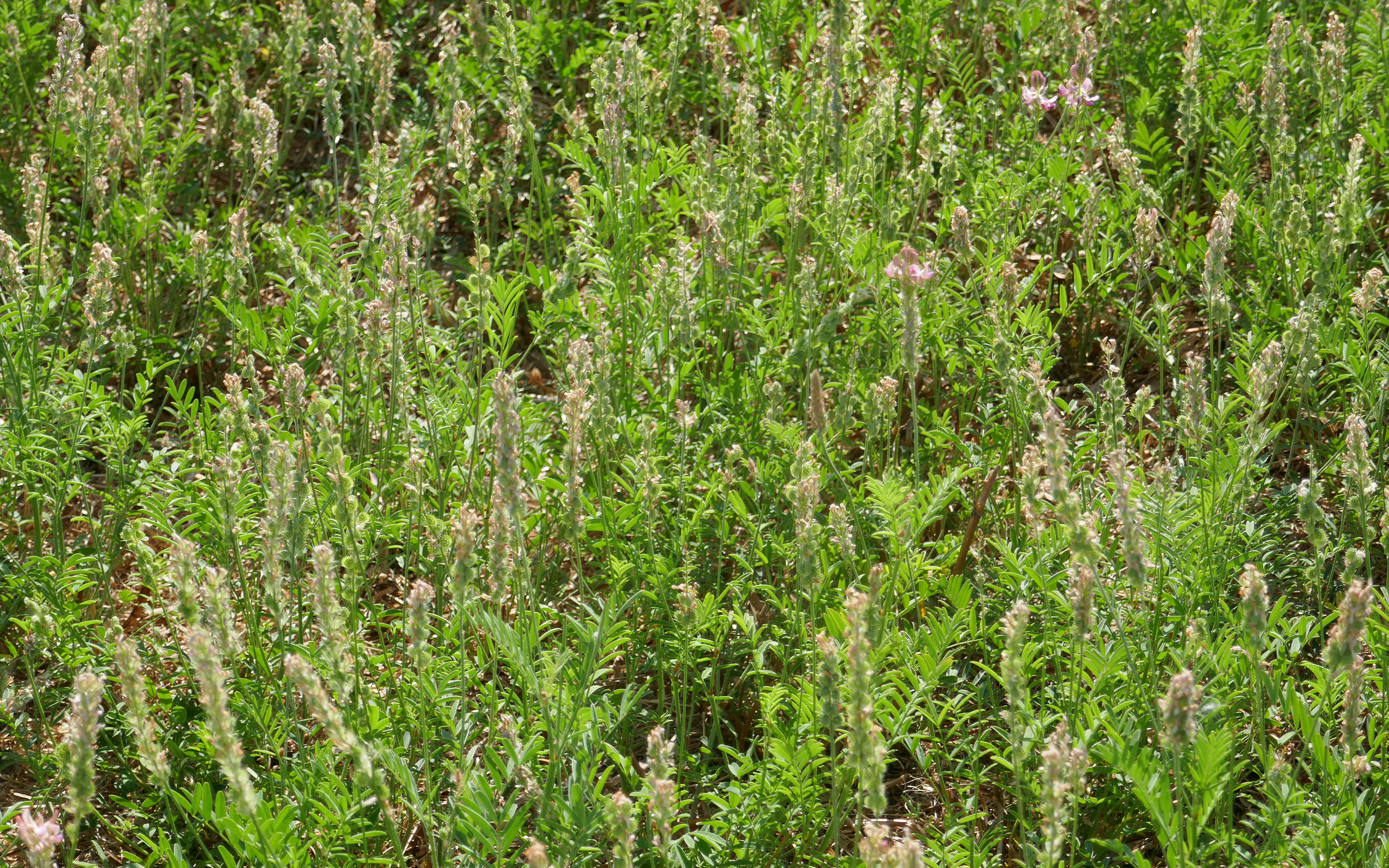
This year, our sainfoin crop was cut for silage by our neighbour, Ed Adams, which he’s taken away for winter fodder. We also combined it for seed to be sown in the autumn and it’s still growing so we’re planning to graze the sheep on it later in the autumn.
As a forage, sainfoin has many positive characteristics. It won’t cause bloat and is a natural anthelmintic as a result of its high levels of chemicals called condensed tannins. It also produces top quality meat and milk. In ruminants, the daily live weight gains for cattle and lambs are high on grazed sainfoin.
Not only is sainfoin drought-resistant, thanks to its deep penetrating roots, it needs no nitrogen fertiliser and little phosphate. There is a high level of residual fertility after a sainfoin ley has been ploughed, so it's very good for repairing worn out 'tired' arable land. We are planning to grow a strip of it in our eight year rotation, to see what effect it has on our soil health.
Discover more about sainfoin from our parent company, Cotswold Seeds, which participated in the EU-funded Health Hay project:
https://www.cotswoldseeds.com/healthyhay-project-intro-sainfoin.asp
Recent news items