

The FarmED Podcast: The Farming Roadmap 2050 with Vicky Robinson
Nov 23, 2026
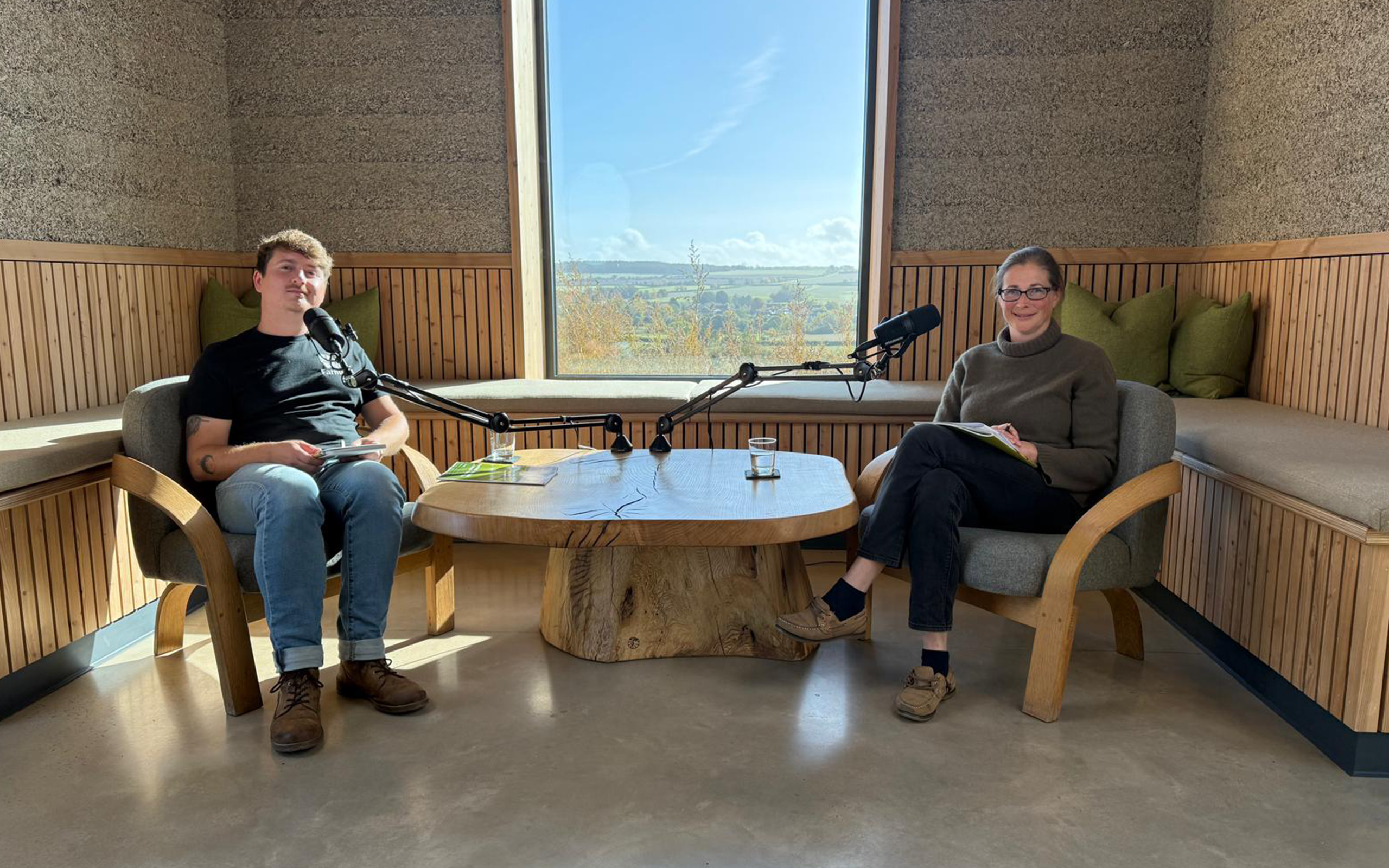
This month, Alex Dye talks to Vicky Robinson, Head of Sustainability at the Agricultural Industries Confederation (formerly part of LEAF and Natural England), about the Farming Roadmap 2050, for a profitable productive, sustainable and resilient farming sector.
Each year, FarmED organises and hosts Leaders in the Field, a series of high level, though-leadership events which bring together leaders from food, farming, nature and climate change sectors to collaborate, innovate, and create solutions to whole system challenges. Earlier this month, Leaders in the Field asked, ‘Does the Farming Roadmap 2050 set the correct course?’
The keynote speaker was Professor Adam Scaife, Head of Long Range Forecasting at the Met Office, who gave his views on El Niño, the long range outlook and UK climate change. Other speakers included John Douglass, Head of Farming Strategy, Farming Directorate, DEFRA, who explained the Creation of the Farming Roadmap 2050; Kelly Hewson-Fisher, Director and Head of Rural Research at Savills, with a facilitated discussion by Adrian Dolby, Head of Agriculture, Buccleuch Estates.
We invited Vicky Robinson to be a guest on The FarmED Podcast to share her insights and expert opinions on the Roadmap. She talks to Alex about everything from why the Roadmap was deemed necessary, and how much input farmers had in its creation, to key takeaways. The impact of new technologies and the effect of geopolitical turmoil on profitability is also part of the conversation.
From a farming family herself, Vicky believes that the greatest challenge is something she heard when she was working on a Nuffield Scholarship. ‘You have to be in a good place to learn something new.’
'If you're in a survivability mode, which I feel that some farm businesses will be, you are literally thinking, how do I survive for the next year? Not thinking, Oh, in 10 years' time, X, Y, and Z. So I think that's a particular challenge at the moment.’
Listen wherever you get your podcasts or watch on the FarmED’s YouTube channel.
The full transcript of the conversation is over on the FarmED website.
TRANSCRIPT
Alex: Hello, welcome to this episode of The FarmED Podcast with your host, me, Alex Dye. And today we are talking about the Farming Roadmap 2050, which came out of the pipeline a few months ago from the UK government and DEFRA and a few other different parties. And there's a few questions about what is it all about? We had a few questions within the team as well, thought we'd reach out to an expert and we have found ourselves an expert. And that expert is the head of sustainability at the Agricultural Industries Confederation, formerly part of LEAF and Natural England. It is Vicky Robinson.
Vicky: Good morning, Alex.
Alex: How are you today?
Vicky: Very well, thank you. Beautiful day. So yes, what's not to like?
Alex: Exactly. It is. And I hope everyone who's enjoying on the camera can enjoy the lovely, stunning view across the valley there as the sun beats down on us. So before we get into the roadmap, which, we were having a quick chat before we came through here and there's quite a lot of minutiae and lots of lots of detail, lots of turning things, we need to sort of deal with. Before we get into all that, would you be able to tell us a little about who you are and what's your story?
Chapter: Twelve years with Natural England and LEAF
Vicky: I will try in a succinct manner. Alex so please do stop me if I start rambling. But yeah, potted history. So family farm, in Woodstock, so not a million miles from where we're sat today. Arable Farm, now run by my brother. I decided I didn't want to go on to the farm, went out into industry. So I actually spent 22 years, as you've just mentioned, with Natural England. So I was working on agri-environment schemes, about 12 years as an advisor particularly in Buckinghamshire and Oxfordshire, so sort of specialising in arable habitats, habitat and species rich grassland ultimately.
Then moved into a national role within Natural England working on agri-environment schemes and working with DEFRA on the implementation of policy. So I worked on countryside stewardship scheme, the mid-tier, higher tier, so this was before we left the EU and then post post the EU referendum as well and then working on ELMS as well and there were various different projects that sat within that. And I then did something called the Nuffield Farming Scholarship, and I then had a mid career crisis, is the best way to describe it, and decided I wasn't sure I wanted to do another 20 years in government at that point. So, joined LEAF, Linking Environment and Farming, as their technical director, and from there joined the Agricultural Industries Confederation of Head of Sustainability. And for those people who aren't familiar with AIC, we are a trade association and we represent what we collectively call the ag input or ag supply sectors, but that's five different sectors - seed, animal feed, fertiliser, crop protection agronomists, those are companies that are out selling product and advice on farm, and then also a combinable crop, which is the grain traders. So we've got members selling product onto farm and then purchasing crops off farm, which are traded. And we represent about 90 to 95% of the businesses in those sectors in the UK. So we're a UK focused trade association. And I wear a couple of other hats as well I'm a director of the Oxford Farming Conference. I'm also on the steering group of the local farmer clusters. So yeah, so you do a few other industry roles outside of the day job.
Alex: Spinning plenty of plates.
Vicky: Absolutely. I love it.
4:00 Could you tell us a little bit about what the farming roadmap. Why was it deemed necessary?
Alex: Great so the farming roadmap then. We have people who are listeners, viewers from all sorts of different disciplines from the environmental side average general public, farmers. Could you tell us a little bit about what the farming roadmap is and how it began? Why was it deemed necessary? Why did someone think we need to have a bit of a roadmap?
Vicky: Yeah, it's interesting. So I sort of obviously did some preparation for this and sort of thinking actually why it came about. And if we look back, we came out of the EU back in obviously in 2016, the referendum, and before that, for the previous 47 years, we'd been in the Common Agricultural Policy, which is a seven-year cycle. So we'd have these regular seven-year cycles where the EU, when we were obviously a member, so we were sort of part of the discussions, were defining what that looked like, both in terms of obviously funding for agriculture, but obviously the regulatory environment that surrounded that. And once we came out of the EU, we were obviously then into defining our own domestic policy and obviously the funding as well that went alongside that. So we were suddenly moved from a regular seven-year cycle to a five-year election cycle. But even within that five-year election, it might not be five years, but also within that you might have changes of Secretary of State, you might have changes of the Prime Minister, as we've seen. And obviously that then that creates some churn. So I think the thought was that there needed to be a long-term vision for farming and that was very much being called for by industry, by government, something to work for.
So that was, I think, some of the reason behind trying to get some sort of long-term strategy for farming. Hence the farming roadmap was born, looking out to 2050. And I think what's interesting, I think in that 47-year common agricultural policy period that we had, there are some people who've lived out their whole careers or a whole generation of farmers have been used to that so it's a huge challenge for farmers who have been used to that. So it's a huge change coming out and actually one of the reasons my Nuffield farming scholarship was looking at the importance of farmer to farmer knowledge exchange at times of change and I did it in 2019 because I could see there were big policy changes that were going to come as we move from an EU to a domestic policy in agriculture and we know. That policy obviously has a huge impact on on farming.
Alex: I don't know if you could have picked a better time to have done that as a study really.
Vicky: No, what's been great is actually it's endured and what I learned looking at sort of the challenges I suppose to farming through my Nuffield was actually it wasn't just policy it's consumer trends it's climate and in 2019 I thought there was a lot going on. And I just feel that's actually like just magnifies hugely even in the last six months you just think oh gosh it can't get more volatile it can't be more things being thrown at you know, thrown at farming and agriculture and then you think oh gosh, what's happened even since January? It just keeps on going and that volatility that farming businesses are trying to manage.
07:20 What are the key takeaways?
Alex: So what do you think are the key sort of takeaways? I don't want to reduce it to a bullet point list because I know it is massive and as you were telling me before we even started recording there there are other documents and other studies that were informing things around this as well, in orbit around this. What are the key takeaways and key actions that jump out to you from this report?
Vicky: I think first of all, it's not a delivery plan and I think that creates some opportunities, but obviously some challenges as well. It's that vision and the vision, and I'm going to sort of read from this, it's for a profitable productive, sustainable and resilient farming sector.
You can't argue with that, but it's built around three themes, which is profitable and productive businesses, sustainable farming, and resilience. And resilience, obviously, is a word that we are hearing a lot about at the moment. It is very much the buzzword at the moment. So that's sort of how it was structured around. And then it was looking at sort of what shifts do we need to see in farming in that time, and particularly looking at shift from public funding to looking at where private finance can come in and more of a market led approach as well. So it was trying to sort of articulate and also bring in things like innovation, technology and supply chain integration. So sitting within that, there's quite a lot of aspects, but that was sort of the high level structure and focus of it.
Alex: And is it mainly geared at what the average farmer can do rather than how the whole system might need to accommodate these different changes?
Vicky: I’m not sure there's such a thing as an average farmer. There's definitely not something as an average farming business as I know you'll be aware Alex. But I think it is looking at a system approach and so the idea obviously coming back to that delivery aspect is that that's when you will dive down into specific sectors and particularly we're seeing some of the sectoral plans that are coming out off the back of the farming road map through the farming and food project board, you've got this, there’s a horticultural and a poultry sector roadmap. So the idea is that you've got this sort of broad aspiration of vision, and then you actually will need to dive into specific sectors or specific farming types in actually the delivery of what's needed within that to deliver this broad vision.
09:17 How does it tie in with the Farm Profitability Report
Alex: And this all ties in with the Farm Profitability Report as well, is that right?
Vicky: Yes, so the farming roadmap came out at the same day as the government produced their response to the farm profitability review, which was the report that Minette Batters had published previously in December, it was launched. So it was December 2025 that was published, and then the government did their response. So on the same day, you had two quite chunky documents coming out. So there was a lot to sort of get your head around. And the Farm Profitability Review had, I think, 57 recommendations in it, which I think government have taken forward 53 of those. So again, it's a huge amount of content, but also a huge amount of work to sort of drive those forward. And you have to take it into bite-sized chunks. So hence some of these sector plans that are coming out. 'Cause otherwise it's just slightly overwhelming. And what do you pick up first? 'Cause everything you pick up and everything obviously within, 'cause it's a system, we're talking about a food system and an agricultural system, everything has a dependency or a knock on impact on something else. So it's trying to take it down into those deliverables that actually can do something.
I think otherwise you can spend hours talking and we all say nice words, and actually, does anything change on the ground? And that's what needs to happen.
Are these achievable goals?
Alex: So, in both of these reports, and the roadmap sort of states that, like you said, the farm needs to be profitable, resilient, it needs to look after the environment. It needs to look after our food security. Do you think these are achievable goals? Are they things that we can realistically do, or do they seem a bit blue sky at this point? That's quite a lengthy question.
Vicky: No absolutely. I mean as an ambition you can't argue with that but I know sitting here today and as I say I'm a partner in our family's arable farm farming on the Cotswolds on Cotswold Brash it does not feel like that at the moment. It's really quite you know it's tough out there and not just in the arable sector there are other sectors. So they're thinking since January we've got the geopolitical situations got more challenging, combined obviously with the climate challenges that we've seen this summer with the really hot, dry summer and what looked like it was going to be a really cracking harvest very quickly within the two months, suddenly went to, it wasn't a good harvest. Depending again. Appreciating that there were nuances throughout the country. Some parts of the country actually had good yields, where we were, we didn't, quite simply. And obviously looking ahead next year, the expectation that El Nino will have, create equally challenging, if not more challenging conditions. So, I mean, I think that's where that resilience comes in. And you start looking at definitions of resilience and that's ability to bounce back. And I think one thing the farming sector is very good at doing is bouncing back. You have to be an eternal optimist to stay in farming. Apparently you've got to constantly be like, next year will be better. So I think it can be achieved. That, I mean, it's that profitable, productive, sustainable and resilient. It absolutely can be achieved, but at the moment it just feels a bit tough in terms of how we're going to get there and what does the business model look like?
And is it around diversification within a business or is it scale? Is it added value? And I think it's probably, it could be any one of those. And I'm a great believer that every farming business is different because it's driven by different people and they will have different views driven by different, it’s driven by the people and they will have different views on what they want to achieve and what success looks like for them. So there isn't going to be one model that fits all because it is driven by what someone wants to achieve and what works for them within the assets that they've got and the environment. What they're farming in combined with what they want to achieve as a business.
13:20 What are the challenges?
Alex: And do you think, I mean I know that we've, I mean the answer to this question could quite easily be it's hard to say until after the fact. Because I mean that's that's what it is isn't it in farming, well anything really. But in farming like you say it looks like it was going to be quite a good year, everything was going quite well and then just two months in the middle of summer kind of dashed a lot of those dreams for a lot of people. Do you think it's fair to say that a lot of these challenges we are starting to see. That these challenges are quite hard to surmount in terms of things like climate? I don't wish to get too political but I mean some of the changes in policy and things that come out of the woodwork in that regard do you think this this road map is sort of fit for purpose in terms of dealing with bigger challenges like that.
Vicky: Again. I think the roadmap as a concept and its high level is, yeah, you can't argue with it. I think what has to happen is that longer term policy direction and that, again, come back to that what needs to be delivered. And obviously, there are some areas that will always be outside of government and farmers' control, farming business controls, whether that's the environmental, wider geopolitical. Geopolitical issues, shall we say.
So, one thing I think is that policy could be static, it could be that, that's within government's influence to ensure that policy direction is stable, it's a stable environment, the regulatory environment obviously is stable and it supports as well as obviously ensures that best practices is followed. And obviously DEFRA's department, farming is touched on by multiple different departments, not just DEFRA. And I think what we do sometimes see is other departments and other policy decisions being made actually then kibosh some policy developments that would be beneficial to farming. So you've got examples like the real challenges around planning and a lot of farmers would say they want rights, whether that's increasing slurry storage or looking at water storage on farm and they come up against the buffers with planning.
15:17 Inheritance Tax
And another area obviously we would have to bring this up is obviously the changes in the inheritance tax which in some ways it's created discussions on farm which probably needed to happen. I would put our farm in that place we actually had a discussion around succession. So that was you know, it's created some conversations, hard conversations, but equally you know anecdotally we're hearing that it's putting a stifle on investment into infrastructure in farm businesses that could be really beneficial both to the resilience going back to that resilience and sustainability of that farm business, the environmental impact that farm businesses have, but the investment isn't happening because it could potentially increase the value of that infrastructure and that, the asset, and tip people into paying inheritance tax where they didn't. So this is the slightly perverse lack of joined up or lack of understanding of where one policy area from a different department in government impacts directly on something that DEFRA is wanting wanting to achieve and the other thing obviously, in particular inheritance taxes, it’s created this real distrust and there needs to be trust that actually you've got my back. And I think sometimes that doesn't always feel the case from a farming perspective.
Alex: So you think having a roadmap like this in place until 2050 gives a nice skeletal framework, if you say, for various different organisations, whether they be individual farmers, farming companies, government even, to look at and say farmers, farming companies, government even, to look at and see this is what we're all aiming for, how can we assist each other in getting to that point?
16:58
Vicky: Yeah, essentially you put it, who's it for? And I think it is for government actually, because I'm not sure how many farmers have, or, you know, read it obviously, stakeholders, we've all poured over it and see what it means for, you know, for our membership-based organisation, for our members. I think it might be that sort of touch point of government to touch back in and go actually here's what we're doing, delivering for this. But as you said earlier, it doesn't sit in isolation. You've got the food strategy, you've got the land use framework, farm profitability review you've already mentioned.
And I think what's important is to maintain how do these all knit together and ultimately deliver what we all want, which is that really dynamic, diverse agricultural sector here in the UK. And it's 0.6 of gross value added in terms of the economic and wouldn't it be great to grow it to 1% and how can we do that? And ultimately, it underpins the food system. And the food system, potentially, again, as we're seeing with some of the climate impacts and geopolitical uncertainty, that's having to evolve as well to ensure that we have got, again, a resilient food system. So it's absolutely fundamental to humanity, ultimately.
18:15 It’s been a bad year for harvests, but you had some quite interesting data about yields.
Alex: And we said, this is a small tangent here, but we were discussing earlier before. I hope you don't want me asking this. We were discussing before we had this, before the cameras came on and we started recording, about how there have been lots of reports talking about how this has been a really rough year for farmers, how yields have been down across the board. It's been a bad year, but you had some quite interesting data that was about that. It’s not quite as simple as that, it was a bit of a few different things across the board. Because I could say that we on the farm we've had quite a bad year for our wheat that was growing quite conventionally, but that's not necessarily the story across the board. Is that right?
Vicky: Well, there's some DEFRA statistics literally came out this week about the harvest, and there were some headlines around it being the worst harvest, I think, since records began. I can't remember when they go back to, I think it was the 80s off the top of my head. But actually, when I delved into those, different crops have had different, different levels. Yeah, there's nuances within that. So oats and barley have had a really poor year, and some of that's due to a combination of decreased area being planted but also decreased yield. But actually, wheat, which I thought was interesting, is that there's a provisional estimate, is how DEFEA caveat it. It's an increase of 0.8% in terms of the wheat harvest on 2025 due to an increase in yield, even though there was a slight decrease in planted area. So, that's obviously wheat's one of our main crops. And actually, oilseed rape was a 36% increase in area this year. There was a real uptick taken in rape being grown and a 6% increase in yield.
So, actually, they had one of the best harvests for a long time, but that was counted, say, by barley and oats. So, again, you can have a headline, but sitting underneath that is always nuance. And again, it's ever thus in farming, you lift the lid on something and you sort of suddenly dive into a very intriguing and interesting, complex discussion.
20:05 Was the Roadmap developed alongside farmers?
Alex: Absolutely. And just going back to the roadmap then, so how did, how would this, was it first sort of created? Was it, was it just someone sat in a room tapping a pen to think, think what that would be nice, I'd like to see more of that in a farm system. Was it, was it developed alongside farmers or was it something that was just kind of handed down from on high and said this is what we've decided you're going to do?
Vicky: I mean there was a team in DEFRA obviously working on it, whose idea it was and actually, you know, sort of where that kernel came from, I don't know, but there was engagement with stakeholders. So there were some various workshops that were held and I imagine some one-to-one conversations as well.
So it was, there was some discussion in that direction of travel. So I know we were involved in some of the stakeholder engagement events earlier on this year but obviously quite how much bearing that had on the end product. I don't know because I'm no longer in government, so I'm not quite sure how much and obviously how much DEFRA might have worked with their arm's length bodies. So Natural England, who I used to work for, is one of the arm's length bodies of DEFRA. So quite how much engagement went on with those departments like Natural England, like the Rural Payments Agency, like the Forestry Commission Environment Agency, who work closely and are impacted and have expertise within them on on these the areas that the farming roadmap touches again I don't know I would imagine so. But I'm not sure.
Alex: But it was quite a collaborative effort to some extent.
Vicky: Yes, I don't, I'm, there was, there was stakeholder engagement. That's so, yes, that's sort of as far as, I'm aware, how collaborative the end product, I don't think, for example, the drafts went out for comment, at least not externally, that I'm aware of, but whether they say there were, there were internal engagement with, with experts within government. I'm not sure.
23.00 What role might new technologies play in delivering the Roadmap?
Alex: So you mentioned earlier about the role that new technologies might play in delivering this roadmap. Could you tell us a bit more about that?
Vicky: Yes, I mean, I think the overarching is around how to make, you know, sufficient efficiency and how to maximise productivity but reduce environmental impact. That's the overall. So in terms of some of the areas that are talked about, it's about emissions from livestock. So some of the new technologies that we know that are out there. Obviously genetics, genetics can play a really key part and there's some really interesting research out there in how you select and particularly for emissions how you can select for methane reduction for example but then there's other things like methane.
Alex: Do you mean by just by breeding?
Vicky: There are traits that you can that can be selected so for for reducing methane and I had a conversation recently with a research institute was talking about actually this could be a real game changer in obviously in the ruminant sector of reducing methane emissions. Then you've also got things like methane suppressing feed products as well. Again that's a growing area. You've got things like looking at how to maximise utilised forage, so grazing. And then you've got obviously precision applications of inputs, so whether that's plant protection products or nutrient products, you've got the whole circularity around use of nutrients, nutrient circulatory So, whether that's sort of dry and pelletizing digestate or farmyard manures, which is again, it says innovation happening in that space. So, you can take the water out because that's the challenge with farmyard manures. A lot of it's in the West, obviously, arable farming's in the East. It's mainly water. Actually, how can you turn that into a utilisable product that actually can be pelletized and then applied at the right time of year? So, there's some interesting work, for example, can you extract struvite out of sewage treatment work and then can you blend that? It's a phosphate. Blend that with fertilizer to create a usable product and it sort of solves the double whammy of obviously high phosphate discharges into watercourses. How can you remove it and then actually use it into a product that farmers can use? There's quite a lot of interesting work going on that circularity perspective.
And then I think looking at drone technology, especially if we're going to have increased rainfall events at certain times of year, but you might need to be perfect timing to get a product onto a crop. But if you go out there in a tractor, you're going to absolutely trash your soil. So could we utilize drone technology? Again, there's a whole world that needs to be looked at in terms of obviously the application. There's a whole regulatory environment around the plant protection products and obviously flying things as well. So sort of I know there's experimental work going on and seeing how do you ensure the droplets when you're flying land and all that type of thing. But again, I think there's some really interesting innovations in there. And I know government put funds into funding some of those proof of concept and then route to market, so they are sort of putting some funding. I mean, AI obviously, the expectation of the role that AI, artificial intelligence, is going to have in that space as well. And how can that be used as a greater good? How can we learn from that? And that's out of my technical knowledge area. But I think there is a lot of potential for innovation. But one of the challenges is always actually how do you get something from a great idea to actually adoption on farm?
And it's that ever been, ever been thus. And I know, again, government are looking at how they can do that. But some of that comes down to actually having farm business having the capital to invest and spend, which again brings us back to cash flow at the moment is quite challenging. So, you know, businesses might be in survival cash flow at the moment is quite challenging. So, you know, businesses might be in survivability mode rather than thinking, oh, great, I'm going to look at investing in X, Y, and Z. So, so it's how to, yeah, how to, how to address that, that aspect and challenge.
26: 37 AI & AI!
Alex: I do like the fact that you clarified what you meant by AI there. I don't know if I've said this on the podcast before, and I do apologise to the person who is about. There was one time we had a group who came round for a farm walk This is such a tangent by the way, but I just thought it was amusing and we were showing them the cows and the milking system at the time that was here. And um, uh, the person who was taking the farm walk said, Oh, and the um, the cows we have here they are all uh impregnated using AI to sort of you know to help them sort of breed. Um, to which someone obviously they meant artificial insemination, yeah. But one member of the farm walk after coming back and sitting down in the Cafe to have some food, looking quite you know confused, they said, I mean, I knew it was advanced, but I didn't realize it had gotten to this level. Obviously got the wrong end of the stick, but I just found that really...
27:33 Key barriers to success
Vicky: Yes, I'm trying to work at AI in that context, but yes, imagine there.
Alex: That’s a worrying conversation to get down to. So we've kind of touched on some of these things already. Do you think there are any key barriers to some of these successes?
Vicky: I mean, one of the key barriers at the moment is the profitability of farming businesses, we trade in a global trading environment. And with the decrease in output onto farm, we haven't had a corresponding huge uptick in the global price of grain and oilseeds. So, we are saying other parts of the world have had their harvest haven't been quite so impacted. So, there is a global and there's a surplus as well for previous years. So, again, there's a whole load of statistics around how much, what does the global grain market looks like, and how much is there out there, because that impacts on on obviously on domestic prices so I think from an arable perspective obviously there are other sectors you know beef prices still holding up. But it's still yeah it's still tough you know winter forage has been fed earlier than it would have been there is there still I mean it's still dry so that grass growth is still not what it should have been so I think that's challenges that it's that yeah that ability to invest and that ability to look forward and that long-term planning, that resilience piece.
29:27 You have to be in a good place to learn something new.
It needs that long-term ability to sort of almost step back from the business and put your head up and go, okay, what does my business look like in 10 years? What does it look like in 20 years? What do I need to get there? What investment is that, whether that's in the people or in the actual farm business machinery or infrastructure? And I think when when it's tough, that mental capacity to do that is actually quite hard to do. And again, I'm sort of picking up some of the themes that came out of my Nuffield.
And one of the quotes was, you have to be in a good place to learn something new. And that sort of makes sense. If you're in a survivability mode, which I sort of feel that some farm businesses will be, you are literally thinking, how do I survive for the next year? Not thinking, Oh, in 10 years' time, X, Y, and Z. So I think that's a particular challenge at the moment. And I think obviously there's a lot of Government policy and thinking of obviously England. And we've been talking about the farming road map it was you know government is agriculture and the environment are both their devolved policy areas so we've got a different situation in England than we have got in Northern Ireland, Scotland and Wales so their support, the way they support farming is different so England is the only country at the moment in the UK but also in the EU it doesn't have any sort of direct payment to farmers so the funding comes through to delivery of public goods which is a sustainable farming incentive.
And obviously there's been the recent experience of the budget going within six hours which I think reflects the demand but equally farmers are looking on that as a means to de-risk their business because it's a guaranteed income for some guaranteed cash coming in for three years even though obviously there's delivery of environmental outcomes in order to have that funding. So I think at the moment it's those barriers to that ambition of the 2050 roadmap is a combination of how businesses feel and where they are from a business, from a profitability or not profitability perspective.
I mean, there are businesses out there losing money combined, obviously, with the geopolitical uncertainty that throws curveballs in like the Straits of Hormuz that then and you just look at the diesel price. I looked up the diesel price for red diesel this morning and it was I think 112p per litre. It was sort of 78p not so long ago. And that was felt to be high. So, and so suddenly you've got these other aspects that you think you're on an even keel that come in and completely, you do a budget and then it's thrown within sort of a month because of something that's completely outside of your influence. And I think that creates again a challenge of people are just trying to go, how do we do this? What can we do differently to reduce our costs to ensure that we actually then have a viable farming business going forward.
32:57 Do you think most farmers might consider moving away from chemicals?
Alex: Do you think, this is a bit of a tangent again, do you think these changes in fuel prices, because I suppose with everything happening in the Straits of Hormuz it's also going to affect prices of other agricultural chemicals as well. Do you think that will have a bit of an impact in the short term on the approach towards farming for most farmers? Do you think most farmers might consider moving away from chemicals?
Vicky: Well, I think in terms of plant protection products, they are only, and I would say the same obviously with fertiliser, I'll come on to that in a minute, for plant protection products, they are used where they are needed. There's been a huge rise in knowledge and implementation of integrated pest management, and obviously we are restricted in terms of what we can use over here, which is creating some, again, creating some challenges when you've literally. All your arsenal that you've got available to you've done everything from an interior pest management perspective and then you might have applied a plant protection product and it's still not having an impact because of climate conditions. That's something. But in terms of cost of inputs, I wouldn't be able to comment on that. I think they are used where they absolutely are needed and as a sort of last resort. And it's also about risk mitigation as well. So looking ahead, if I use this, does it mitigate a risk of further down the line. I mean interestingly with fertiliser particularly nitrogen fertiliser use, which is what we tend to be talking about when we're talking about the costs, obviously, there are other nutrients that you apply that cost in the fertiliser space as well. Nitrogen use, interestingly, has reduced by 50% over 40 years in the UK. So we've got government statistics that show that. So it's already the use of it is being used more targeted. And I think that's a combination of advice, it's a combination of awareness of things like nitrogen use efficiency and using it where it's really needed. So, and I think that probably when we had the obviously Russia Ukraine situation, that and the price increased of nitrogen fertilizer, that sort of, I suppose, made people think about how they were utilizing it. And I think that sort of mindset has continued along with obviously.
There is more and more, again, coming back to that technology, more and more technology out there around those precision applications. There's more and more awareness of things like nitrogen use efficiency, alongside your nutrient management planning, and actually really understanding what nutrients do you need to fill the gap between what you've got in the soil and what's available, and actually the crop that you're putting in, and what you need to fill that and that combination of nutrients and things like the right pH of the soil. Which obviously can impact on the availability of nutrients. So, I think that's already happening.
I think there's more that can be done. There's always more that can be done, but I think that is already, yeah, it's concentrating, it's concentrating the mind.
Alex: Do you think when you were looking through the roadmap or when you were revising the roadmap for this discussion, were there any key areas you felt were missing? Things that weren't discussed enough or angles that perhaps you would have liked to have seen explored more within the roadmap context.
Vicky: There was nothing obviously missing because again it was high level. It was broad, it was strategic. So there's nothing that made me think oh goodness me, that's missing as a concept. I think as always proof comes in actually what does this mean in terms of delivery and action on the ground. So I think that was one of the I would say slight frustrations. It's like what does this, actually mean in terms of what government is going to do. It's all very well putting it out and it was quite, it made me reflect actually that when you asked me about doing the Podcast I suddenly remembered the farming roadmap and hence thinking, oh gosh, yes, that was that. That was, and it was only in July, it was published. But everything sort of moves on at such a pace, and there's so much sort of other things going on that it's very easy to forget that sort of it's there as a guiding light, which again might indicate who it's there for and how much government are using it. And say, through the farming and food program board, that's one of the ways of obviously looking at how they can deliver it.
36:00 What should be a farmer’s next steps in terms of the Roadmap?
Alex: So what do you think, okay so let's say if a farmer is listening to this right now, perhaps they have or haven't read the road map, what do you think should be their next steps? What would you like to see them perhaps start thinking about doing in order to think about their resilience or profitability or the environmental primary purpose of their farm. I'm aware that's quite a...
Vicky: No, and actually it brings in, I've got another report sitting on my lap, but actually the Oxford Farming Conference 2026 report, which I will hold up to the camera, UK farming grasping the opportunities. So that is a really interesting report by Louise Manning and it talks all about the questions that farming businesses should be asking themselves. So there's a sort of reflective set of questions within the report and it's talking a lot about mindset and how to build that resilience. So if I was a farming business I would be looking, and I know there are farmers who have utilised the questions and made changes as a result of it, so I would point them towards this report and say look at the reflective questions.
Ask them to yourself and they're quite deep questions and really sort of trying to get coming back to the what we met I mentioned earlier around what do you want as a business? What does success look like for you as a business? Have you got the right skills and knowledge within your farming team, whether that's family members, whether that's employees, or whether you're buying that in, and what does that look like going forward for what you want to achieve? So I would advocate having a look at this report, and it's had a lot of traction. Louise is still talking about it various different places there are businesses that are implementing it within their business operations. Because this is, I sort of think, that there are platforms out there that look at the environmental resilience of a business, but actually, this starts looking at the economic, if we're looking at that pillar of sustainability, this tests the economic resilience of a business.
And if you're wanting to invest in your business, is it going to be economically viable going forward? And this is looking at how to do a stress test basically on the economic viability of that business. So, I would, yes, it's available on the Oxford Farming Conference website. Obviously, I'm a director of that so I've got a vested interest and it was also supported by the Frank Parkinson Agricultural Trust and I am the lead agricultural trustee, for transparency, on that as well. But it was, you know, so the traction it's had and the visibility it's had it's not just sat on the shelf, it is really being used. So that will be my go-to place for a farm business.
Alex: So that's where to prompt people to think, think a bit critically about their next steps where they can go, things, holes they may need to be aware of.
Vicky: Absolutely. You know it's a hard thing to do, particularly if you're running a multi-generational business, obviously, yeah, if you're a tenant, again, that's, you know, what, you know. How much do you invest in your business? So it's, I think, but I think for farms to be resilient and to be really true to themselves, they almost, it's holding a mirror up and actually having some quite hard, and obviously, farming's very emotional, and I can speak to, to that. To speak to that, it's more than it is, cliches, it's not just a job. You know, there's that deep emotional connection to where you farm, where you were brought up. So, it's not going to be sort of dismissed as not a hard thing to do, but equally, it's essential, I think, for that long term survivability of businesses.
Alex: That’s fantastic. Thank you very much. It's been great having a chat with you today. Again, lovely to see the sun out and shining at this late time of the year. Thank you very much for joining us here today Vicky and thank you very much for tuning in to this episode of The FarmED Podcast. Please do let us know how you're getting on with the podcast, give us a rating, give us a review, give us a like or a dislike. I wouldn't be so happy with that second one but it's fair enough, it's how you feel, that's fine. Thank you, tune in next time and we'll see you again soon, I’m sure.
Recent news items